


What's Happening?
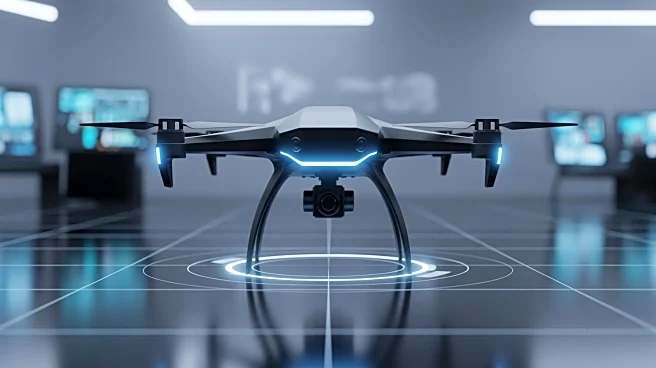
The Department of Homeland Security has chosen Fortem Technologies to provide kinetic counter-drone solutions for the 2026 FIFA World Cup, which will be held across 16 host cities in the United States, Mexico, and Canada. Fortem's DroneHunter® hexcopter
interceptor, which uses a net-based capture system, will be the primary tool to neutralize hostile drones without causing debris or communication interference. This system is particularly suited for dense stadium environments where safety is paramount. The event is expected to attract over one million international visitors, making it one of the most complex security operations for a professional sporting event. Fortem's technology was previously used at the 2022 FIFA World Cup in Qatar, marking its second consecutive deployment for the tournament.
Why It's Important?
The selection of Fortem Technologies underscores the growing importance of counter-drone measures in securing large-scale events. As drones become more sophisticated, they pose significant risks for surveillance and disruption. Traditional countermeasures like radio-frequency jamming are often ineffective against autonomous drones and can disrupt legitimate communications. Fortem's system offers a safer alternative by physically capturing drones, thus minimizing risks to spectators. This initiative is part of a broader effort by the Department of Homeland Security to enhance domestic counter-UAS capabilities, supported by $115 million in funding. The successful implementation of these technologies could set a precedent for future events, influencing security protocols worldwide.
What's Next?
As the 2026 FIFA World Cup approaches, Fortem Technologies will deploy its systems across the eleven U.S. host cities. The company will likely coordinate closely with local law enforcement and security agencies to ensure seamless integration of their technology. The Department of Homeland Security's new Program Executive Office for Unmanned Aircraft Systems and Counter-UAS will oversee these efforts, potentially leading to further advancements in drone security technology. The success of this deployment could influence future security strategies for international events, prompting other countries to adopt similar measures.