





What's Happening?
Paula Kamps, a German painter celebrated for her unique watercolors and ink works that explore themes of memory and impermanence, has died at the age of 36. Her Paris-based gallery, Sans Titre, confirmed her passing on May 27, though the cause of death
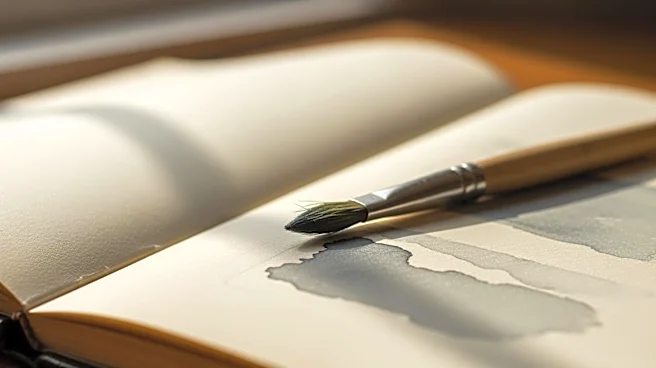
was not disclosed. Kamps was known for her softly hued artworks that often depicted fading figures and flowers, using thin washes of watercolor and ink to create images that appeared to be emerging or dissolving. Her work was recognized for its ability to merge abstraction with figuration, engaging deeply with the transience of memory. Kamps studied philosophy in Berlin before pursuing art at the Kunstakademie Düsseldorf, where she became a master student under Tomma Abts. She later moved to Chicago, where she held her debut solo exhibition in 2021. Her work gained international recognition, with exhibitions in Europe and the United States.
Why It's Important?
Paula Kamps' death marks a significant loss in the art world, particularly for those who appreciated her exploration of memory and impermanence through art. Her work resonated with audiences across Europe and the United States, bridging cultural and artistic boundaries. Kamps' ability to blend abstraction with figuration offered a fresh perspective on traditional art forms, influencing both contemporary artists and art enthusiasts. Her contributions extended beyond painting, as she also engaged in poetry and artist books, further enriching the cultural landscape. The themes she explored in her work, such as the fleeting nature of memory, are universally relatable, making her art impactful and enduring. Her passing leaves a void in the art community, but her legacy will continue to inspire future generations of artists.
What's Next?
While the immediate future following Paula Kamps' passing involves mourning and reflection within the art community, her work is likely to see increased interest and appreciation. Galleries that have previously exhibited her work, such as Sans Titre and Galerie Christine Mayer, may organize retrospective exhibitions to honor her legacy. Art collectors and institutions might seek to acquire her pieces, recognizing their cultural and artistic value. Additionally, her influence on contemporary art could lead to discussions and studies on her techniques and thematic explorations, potentially inspiring new artistic movements. The art world will likely continue to celebrate her contributions, ensuring that her impact endures beyond her lifetime.