


What's Happening?
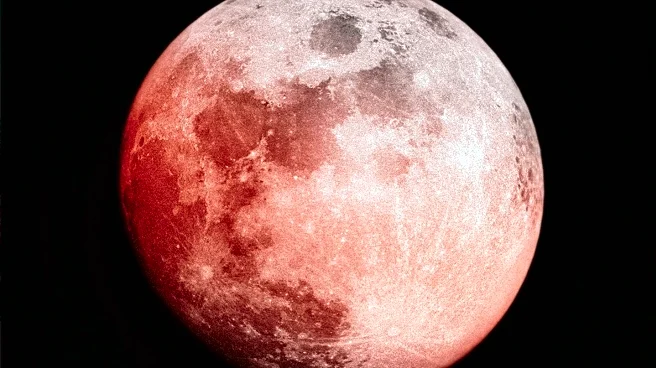
The Pink Moon, a notable celestial event, is set to illuminate the night sky on April 1, 2026. This full moon, known for its bright appearance, will reach its peak brightness at 10:12 PM EDT. Despite its name, the Pink Moon does not actually appear pink;
the name is derived from the early spring bloom of the Phlox subulata, a pink wildflower native to North America. The moon will rise near the eastern horizon around sunset and will be visible throughout the night, setting close to sunrise. This event is also referred to as the Paschal Full Moon, marking the first full moon after the March equinox, which traditionally determines the date of Easter. The Pink Moon offers a visually striking experience due to the moon illusion, where it appears larger near the horizon.
Why It's Important?
The Pink Moon is significant not only for its visual appeal but also for its cultural and seasonal implications. It marks the beginning of April and is associated with the renewal and thawing landscapes of spring. This celestial event is a reminder of the natural cycles and the interconnectedness of cultural traditions with astronomical phenomena. For skywatchers and astronomy enthusiasts, the Pink Moon provides an opportunity to engage with the night sky and appreciate the beauty of celestial events. Additionally, as the Paschal Full Moon, it plays a role in determining the date of Easter, highlighting its importance in religious and cultural contexts.
What's Next?
Following the Pink Moon, April will feature a series of celestial events that skywatchers can look forward to. These include various meteor showers and planetary alignments that will offer more opportunities for stargazing. As the Pink Moon sets the stage for these events, enthusiasts are encouraged to plan their stargazing sessions to make the most of the clear spring skies. The continued interest in such events may also inspire educational and community activities centered around astronomy and the appreciation of natural phenomena.