






What's Happening?
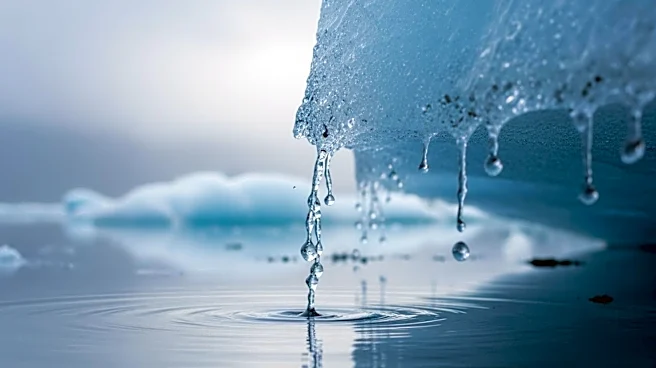
Oscar-nominated director Sara Dosa has released a new documentary titled 'Time and Water,' which explores the impact of climate change on Iceland's glaciers through the lens of Andri Snær Magnason's family history. The film diverges from traditional climate change narratives
by focusing on personal stories and memories rather than statistics. Dosa was inspired by Magnason's writing, which intertwines love stories and childhood nostalgia with the natural landscape of Iceland. The documentary aims to connect audiences emotionally to the climate crisis by illustrating how human identities are intertwined with the landscapes they inhabit. Dosa's approach is described as polytemporal, capturing the essence of time through water systems like glaciers and rivers, and emphasizing the emotional and sensory power of cinema to convey the urgency of environmental issues.
Why It's Important?
The release of 'Time and Water' is significant as it offers a fresh perspective on climate change, a critical global issue. By focusing on personal narratives and emotional connections, the documentary seeks to engage audiences in a more profound way, potentially inspiring action and awareness. This approach highlights the human dimension of environmental change, emphasizing that the future is shaped by present actions. The film's release comes at a time when the effects of climate change are increasingly visible, making it a timely contribution to the discourse on environmental responsibility. It underscores the importance of storytelling in shaping public perception and policy regarding climate issues, potentially influencing both individual and collective actions towards sustainability.
What's Next?
With 'Time and Water' now available worldwide, the documentary is expected to spark discussions on the role of personal and cultural narratives in addressing climate change. It may influence other filmmakers and artists to explore similar themes, contributing to a broader cultural movement that prioritizes environmental consciousness. The film could also prompt educational institutions and environmental organizations to incorporate it into their programs, using it as a tool to engage communities in climate action. As audiences reflect on the film's message, there may be increased advocacy for policies that protect natural landscapes and address the root causes of climate change.
Beyond the Headlines
The documentary's focus on personal and cultural narratives offers a deeper understanding of how climate change affects human identity and memory. It challenges the dominant paradigms that view nature as something to be conquered, instead promoting a vision of kinship with the natural world. This perspective could lead to a shift in how societies perceive and interact with the environment, fostering a more sustainable and respectful relationship with nature. The film also highlights the emotional impact of environmental change, introducing concepts like solastalgia, which could become more prominent in discussions about mental health and climate change.