







What's Happening?
Recent updates in the supply chain and freight technology sectors include significant advancements and expansions. Yang Ming's YM Willpower completed its first LNG bunkering in Singapore, marking a milestone in the company's rollout of LNG-fueled vessels.
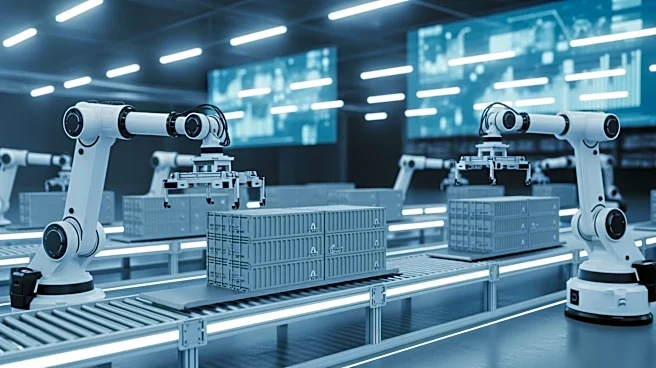
The CMA CGM Group enhanced its Eagle Express 1 service, improving connectivity between Japan and the U.S. West Coast. Additionally, DHL Global Forwarding expanded its air capacity between Asia and Europe. Other notable developments include Cainiao's construction of robotic warehouses and LOGISTEC's addition of harbor cranes at the Port of Houston.
Why It's Important?
These developments in supply chain and freight technology are crucial for enhancing global logistics efficiency and sustainability. The shift towards LNG-fueled vessels by Yang Ming represents a significant step in reducing carbon emissions in maritime transport. Enhanced connectivity and expanded air capacity by CMA CGM and DHL, respectively, improve international trade routes, facilitating faster and more reliable shipping. The construction of robotic warehouses by Cainiao and the addition of harbor cranes by LOGISTEC highlight the ongoing trend towards automation and modernization in logistics, which can lead to cost savings and increased operational efficiency.
What's Next?
As these technological advancements continue to unfold, the logistics industry is likely to see further integration of sustainable practices and automation. Companies may increasingly invest in LNG technology and robotic solutions to stay competitive and meet environmental regulations. The expansion of international trade routes and logistics capabilities will likely drive further globalization of supply chains, impacting businesses and consumers worldwide. Stakeholders will need to adapt to these changes, potentially reshaping industry standards and practices.