







What's Happening?
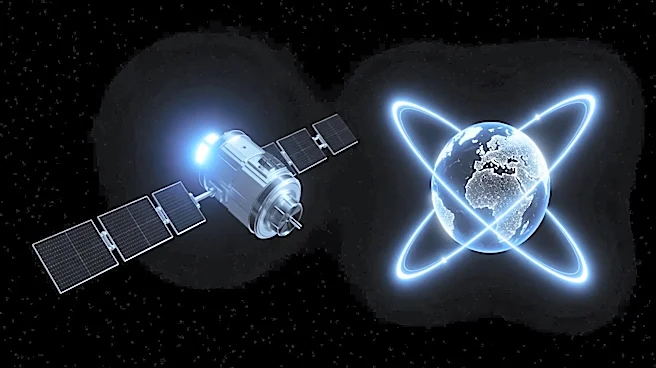
Sophia Space, a space computing specialist, has announced a strategic collaboration with Canadian satellite telecommunications provider Kepler Communications. The partnership will involve demonstrating software and hardware in orbit, starting later this
year. Sophia Space plans to deploy NVIDIA-powered edge compute nodes on Kepler satellites, aiming to process data in space rather than sending it back to Earth. This initiative will validate software and hardware integration in orbit and demonstrate the performance of distributed node management at scale. The collaboration also includes the potential for longer-term projects, such as the joint development of Orbital Data Center nodes on future Kepler satellites.
Why It's Important?
This collaboration represents a significant advancement in space technology, particularly in the field of data processing and satellite communications. By processing data in orbit, the initiative could reduce latency and increase the efficiency of data handling in space. This capability is crucial for real-time applications and could enhance the performance of satellite networks. The partnership also highlights the growing trend of international collaborations in the space industry, which can lead to more innovative solutions and shared resources. The success of this project could set a precedent for future collaborations and technological advancements in space computing.
What's Next?
As the project progresses, Sophia Space and Kepler Communications will likely focus on refining their technology and expanding their capabilities. The deployment of the NVIDIA-powered edge compute nodes is expected to begin in the fourth quarter of this year. If successful, the collaboration could lead to further developments in space-based data processing and communication technologies. The companies may also explore additional partnerships and projects to leverage their combined expertise and resources. The outcomes of this demonstration could influence future satellite designs and operations, potentially leading to more efficient and capable satellite networks.