




What's Happening?
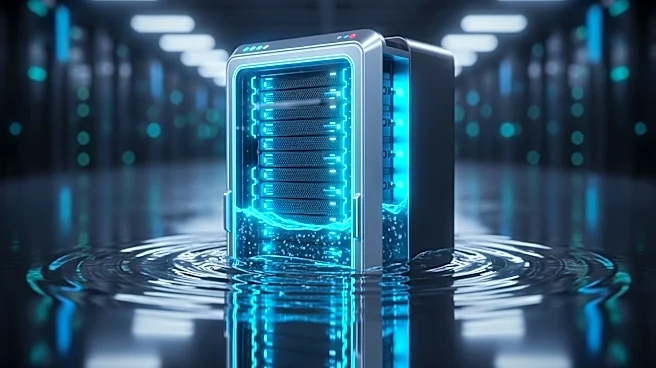
Data centers in the Middle East are increasingly adopting liquid cooling technologies to meet the demands of AI workloads. Milan Radia, CEO of Connected Compute, highlighted the shift from traditional air-cooling systems to direct-to-chip liquid cooling,
driven by the need to support high-density AI projects. This transition is essential as new technologies, such as Nvidia GB300 chips, require significantly more power per rack. The move towards liquid cooling is also influenced by the need for data sovereignty, with countries like the UAE and Saudi Arabia prioritizing domestic data centers. The focus is shifting from training AI models to 'inferencing,' which requires low latency for real-time application responses.
Why It's Important?
The adoption of liquid cooling in data centers is a critical development in the tech industry, particularly as AI applications continue to grow. This shift not only enhances the efficiency and capacity of data centers but also addresses the increasing power demands of modern AI technologies. For the Middle East, this transition supports the region's strategic goals of becoming a hub for digital infrastructure and data sovereignty. The ability to handle high-density AI workloads positions the region as a competitive player in the global tech landscape, attracting further investment and innovation.
Beyond the Headlines
The move to liquid cooling represents a broader trend in the tech industry towards more sustainable and efficient data center operations. As AI technologies evolve, the infrastructure supporting them must also adapt, leading to potential obsolescence of older facilities. This shift also raises questions about the environmental impact of increased energy consumption and the need for sustainable practices in data center management. Additionally, the focus on data sovereignty highlights the geopolitical implications of data management and the importance of secure, domestic data storage solutions.