





What's Happening?
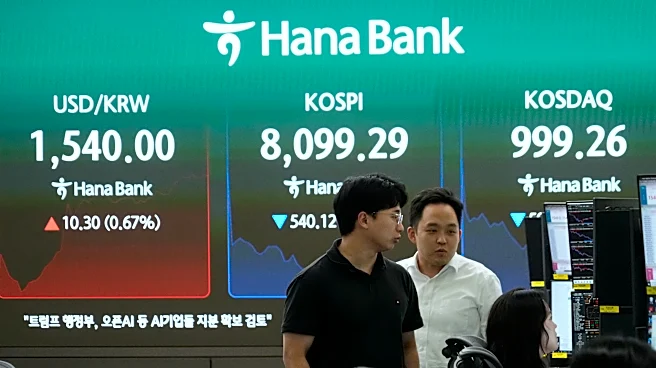
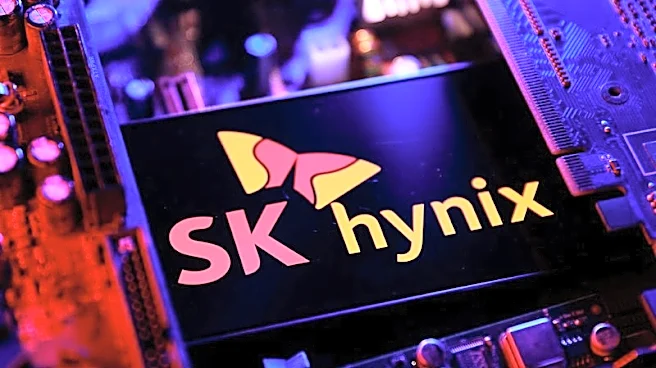
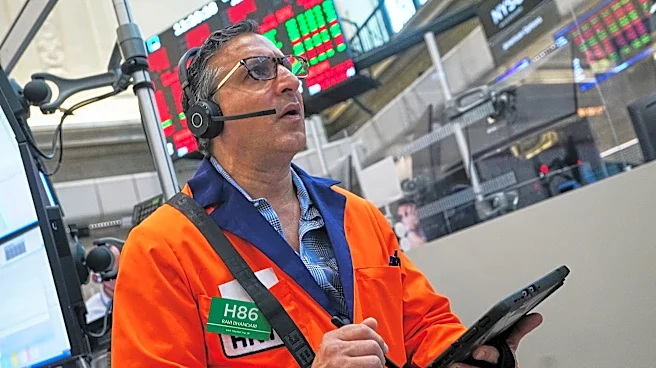
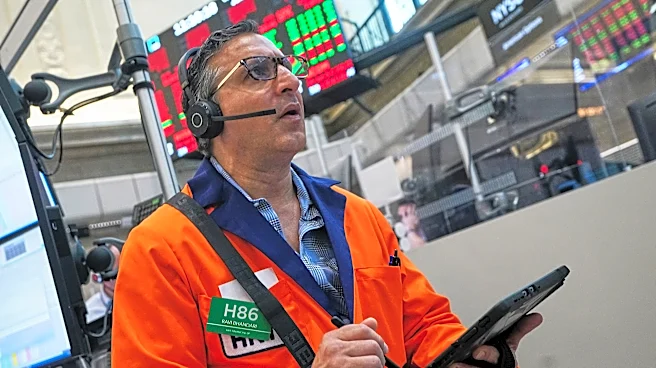
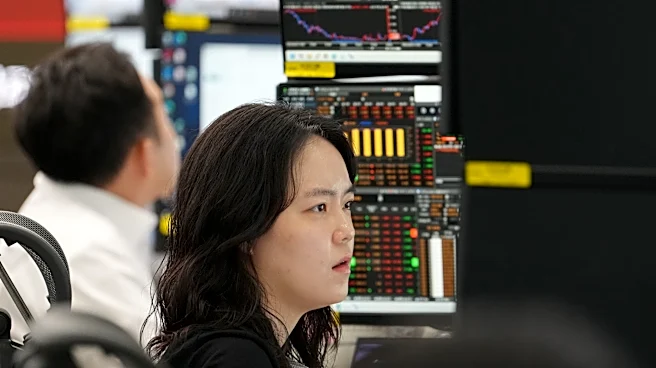
South Korea's stock market experienced a sharp decline, with the Kospi index falling by over 5% as technology heavyweights followed the downturn in Wall Street's AI-linked stocks. Major companies like Samsung Electronics and SK Hynix saw significant drops
in their stock prices, contributing to the overall market losses. The selloff in South Korea is part of a broader regional trend, with other Asian markets also experiencing declines. This market reaction is influenced by the recent performance of tech stocks in the U.S., where high expectations for AI-driven growth have led to volatility. Additionally, geopolitical tensions in the Middle East are adding to investor concerns, impacting global market stability.
Why It's Important?
The decline in South Korea's stock market highlights the interconnectedness of global financial markets, particularly in the technology sector. The performance of AI-linked stocks in the U.S. has a ripple effect on international markets, affecting investor sentiment and economic outlooks. The situation underscores the vulnerability of tech-heavy economies to shifts in market expectations and geopolitical developments. For South Korea, a major player in the semiconductor industry, these market dynamics could have significant implications for economic growth and employment. The broader impact on global markets may also influence investment strategies and economic policies in other regions.
What's Next?
Market participants will likely continue to monitor developments in the technology sector and geopolitical tensions closely. South Korea's government and financial institutions may consider measures to stabilize the market and support key industries. Investors may need to reassess their portfolios and risk management strategies in light of the current volatility. Additionally, any resolution or escalation in geopolitical tensions could further influence market trends and investor confidence.