


What's Happening?
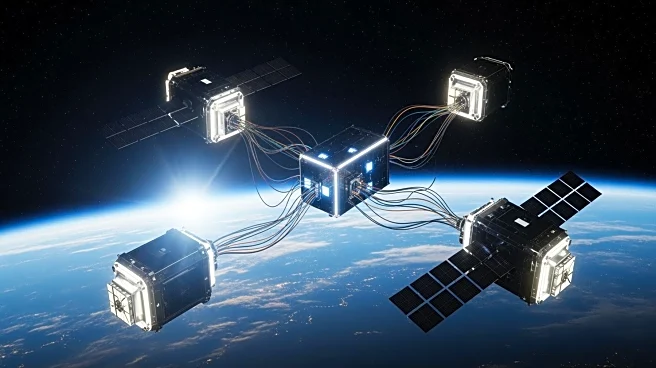
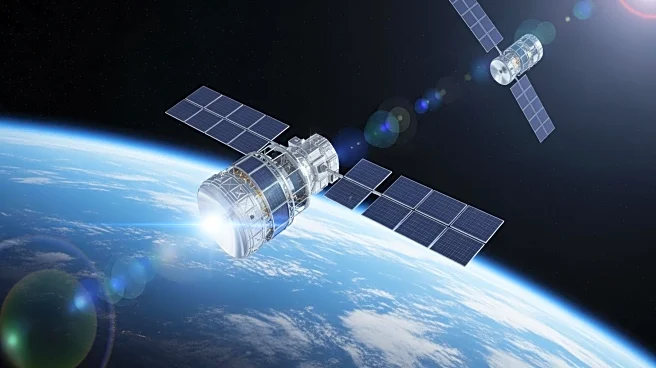
Tech giants, including Elon Musk's SpaceX and Jeff Bezos's Blue Origin, are advancing plans to establish AI data centers in orbit. This initiative aims to leverage the abundant solar power and cooling benefits of space to address the growing energy demands of AI workloads on Earth. The competition is intensifying as companies like Nvidia-backed Starcloud have already achieved a milestone by training a large language model in space. The move to space-based data centers is driven by the need to overcome terrestrial energy limitations, which are becoming a bottleneck for the $1 trillion data center industry.
Why It's Important?
The shift to orbital data centers represents a significant evolution in the data center industry, potentially transforming how AI workloads
are managed. By utilizing space's endless solar energy and vacuum cooling, companies can significantly reduce operational costs and environmental impact. This development could alleviate the strain on Earth's energy resources, which are increasingly challenged by the rapid expansion of AI technologies. Moreover, it positions the U.S. as a leader in innovative data center solutions, potentially giving it an edge in the global AI race against competitors like China.
What's Next?
As the race to establish orbital data centers continues, companies face technical and regulatory challenges, including radiation hardening and data relay technologies. The success of these initiatives will depend on advancements in reusable rocket technology and international cooperation on space regulations. The industry anticipates that by 2030, orbital data centers could become a mainstream solution, providing resilient and sustainable computing power. This could lead to a new era of AI development, with significant implications for industries reliant on data processing and storage.
Beyond the Headlines
The move to space-based data centers raises ethical and environmental considerations, such as the potential for increased space debris and light pollution. Additionally, the geopolitical implications of space-based infrastructure could lead to new international treaties and regulations. The success of these projects could also drive further investment in space technologies, potentially opening new markets and opportunities for innovation beyond data centers.