




What's Happening?
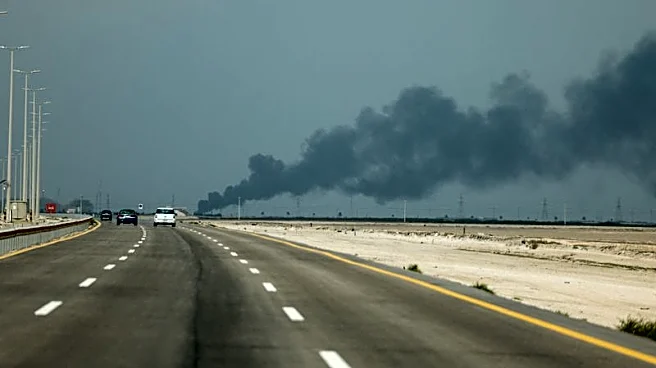
Goldman Sachs has issued a warning about a potential natural gas price shock due to disruptions in Qatar, a major global supplier of liquefied natural gas (LNG). Recent attacks have damaged QatarEnergy's Ras Laffan Industrial City, the world's largest
LNG facility, leading to significant production challenges. Samantha Dart, co-head of global commodities research at Goldman Sachs, highlighted the risk of prolonged disruptions causing severe price increases. Natural gas prices have already risen by 50% to 70%, and further increases are possible if the supply issues persist. The situation is exacerbated by the seasonal nature of gas markets, which rely on inventory buildup before winter. While temporary relief has come from China's surplus gas entering global markets, the underlying supply constraints remain a concern.
Why It's Important?
The potential surge in natural gas prices could have widespread implications for the global economy, particularly in sectors reliant on gas for electricity generation, industrial processes, and heating. The U.S., as the largest LNG exporter, faces challenges in quickly filling the supply gap due to limited spare capacity. Prolonged high prices could lead to increased energy costs for consumers and businesses, potentially slowing economic growth. The situation also underscores the geopolitical vulnerabilities of energy markets, highlighting the need for diversified energy sources and infrastructure resilience.
What's Next?
If the conflict in Qatar is resolved soon, there may be a stabilization of gas prices. However, if disruptions continue, markets may need to implement more aggressive demand rationing, potentially leading to further price hikes. Stakeholders, including governments and energy companies, may need to explore alternative energy sources and invest in infrastructure to mitigate future supply shocks. The situation could also prompt policy discussions on energy security and the strategic importance of diversifying energy supply chains.