





What's Happening?
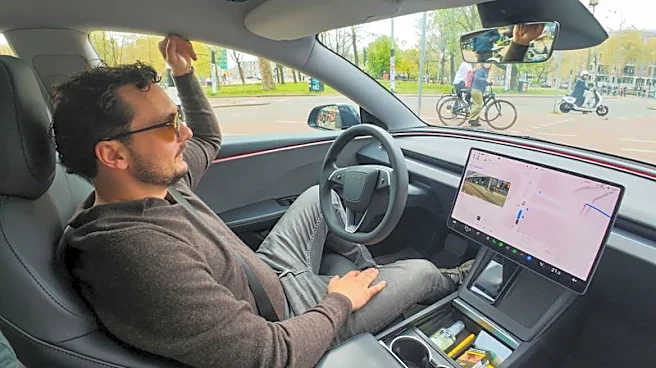
Tesla has announced a significant update to its Full Self-Driving (FSD) feature, incorporating gamification elements such as visual progress tracking and milestone celebrations. This update is part of a broader strategy to transform the traditional ownership
model into a subscription-based service. The new FSD app allows users to access the service for a $99 monthly fee, replacing the previous $8,000 one-time purchase option. This change is set to launch on February 14, 2026. The gamification approach borrows engagement tactics from social media platforms, aiming to increase user interaction and data collection necessary for advancing autonomous vehicle technology. Critics have raised concerns about the potential risks of applying dopamine-driven engagement tactics to safety-critical systems.
Why It's Important?
The shift to a subscription model for Tesla's Full Self-Driving feature represents a significant change in the automotive industry, akin to the transformation seen in media consumption with services like Netflix. By gamifying the driving experience, Tesla aims to foster consistent user engagement, which is crucial for collecting the extensive data needed to develop fully autonomous vehicles. This strategy not only promises predictable revenue streams for Tesla but also positions the company at the forefront of a new era in automotive technology. However, the approach raises questions about the safety implications of using psychological engagement tactics in driving systems, potentially impacting driver behavior and road safety.
What's Next?
As Tesla rolls out its subscription model, the company is likely to continue refining its FSD capabilities, with prices expected to rise as the technology advances. The success of this model could influence other automakers to adopt similar strategies, further shifting the industry towards service-based revenue models. Stakeholders, including regulators and consumer safety advocates, may closely monitor the impact of gamification on driver behavior and safety, potentially leading to new guidelines or regulations. Tesla's approach could also spark discussions on the ethical implications of using engagement tactics in safety-critical systems.
Beyond the Headlines
The introduction of gamification in Tesla's FSD feature highlights a broader trend of integrating digital engagement strategies into physical products. This development could lead to long-term shifts in how consumers interact with technology, blurring the lines between digital and physical experiences. The reliance on data collection for advancing autonomous driving technology also raises privacy concerns, as users' driving habits become part of a larger dataset. As the automotive industry evolves, companies may need to address these ethical and privacy issues to maintain consumer trust.