






What's Happening?
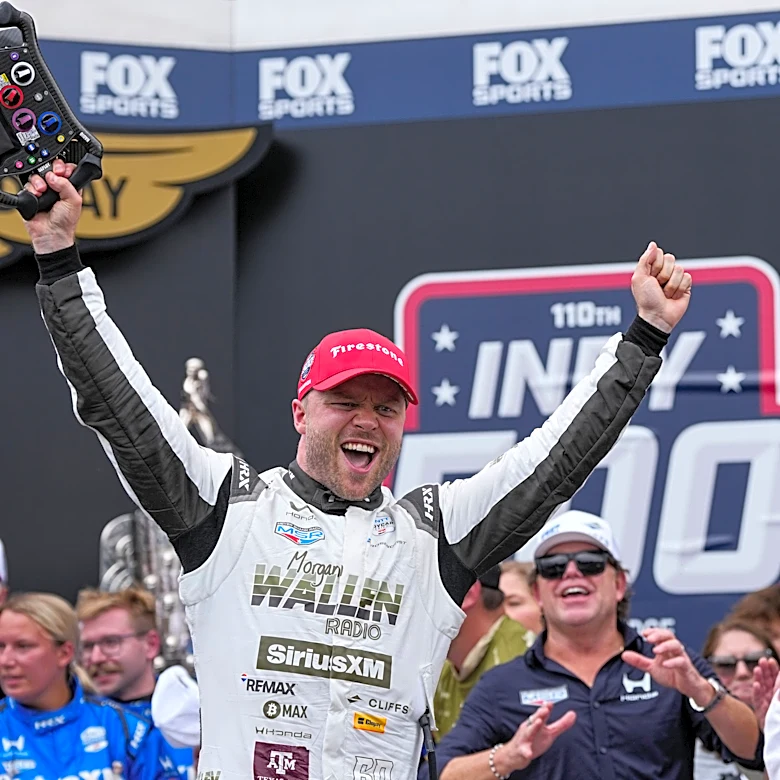
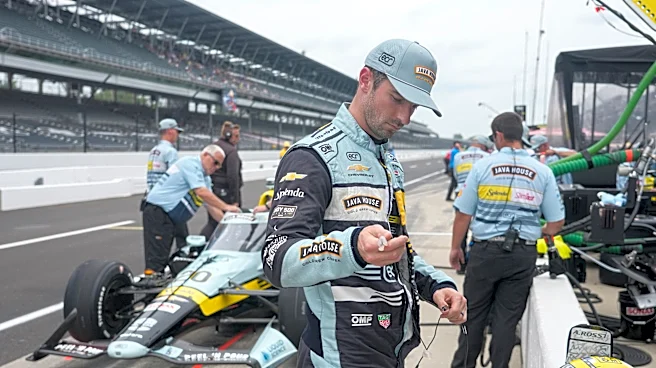
Felix Rosenqvist achieved a historic victory at the Indianapolis 500, winning by a mere 0.0233 seconds, marking the closest finish in the race's history. The dramatic conclusion unfolded as Rosenqvist, driving for Meyer Shank Racing, overtook David Malukas
of Team Penske in the final moments of the race. The event was marked by a series of strategic maneuvers and a critical final lap where Rosenqvist managed to pass Malukas after a restart. This victory is Rosenqvist's second career win in 120 IndyCar races and follows the recent birth of his first child. The race was also notable for a red flag incident involving rookie Caio Collet, which added to the tension of the final laps.
Why It's Important?
Rosenqvist's victory at the Indianapolis 500 is significant for several reasons. It highlights the competitive nature of the IndyCar series and the skill required to win such a prestigious event. The close finish underscores the high level of competition and the importance of strategic racing decisions. For Rosenqvist, this win not only adds to his career achievements but also places him among the elite group of Swedish drivers who have won the Indy 500, joining Kenny Brack and Marcus Ericsson. The race also serves as a reminder of the unpredictable nature of motorsports, where outcomes can change dramatically in the final moments.
What's Next?
Following this victory, Rosenqvist and his team will likely focus on maintaining their competitive edge in the upcoming races of the IndyCar series. The win could boost Rosenqvist's confidence and position within the racing community, potentially leading to more opportunities and sponsorships. For the other competitors, particularly David Malukas, the close finish may serve as motivation to refine strategies and improve performance in future races. The IndyCar series will continue to attract attention as drivers and teams prepare for the next major events on the calendar.