








What's Happening?
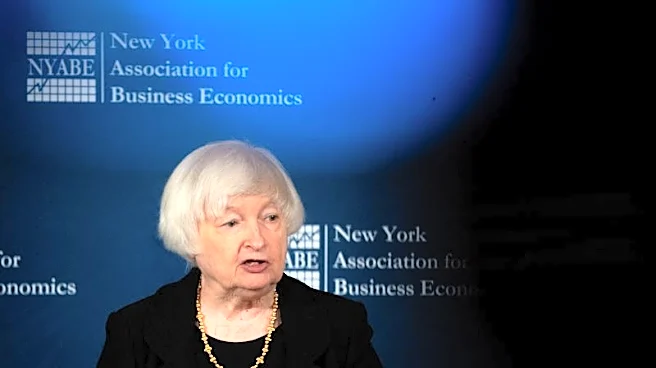
Federal Reserve Bank of New York President John Williams has highlighted the impact of the ongoing Middle East conflict on inflationary pressures in the U.S. economy. According to Williams, the war has led to significant increases in energy prices, which
are contributing to overall inflation. He noted that if the conflict persists, it could result in a large supply shock, raising inflation through increased intermediate costs and commodity prices while dampening economic activity. Williams emphasized the Fed's commitment to returning inflation to its target, despite the unusual circumstances. The Fed has maintained its interest-rate target range at 3.5% to 3.75% and is in a wait-and-see mode regarding future policy adjustments.
Why It's Important?
The developments in the Middle East and their impact on inflation are crucial for the U.S. economy, as they affect consumer prices and economic growth. Rising energy costs are already influencing prices of goods such as airfares, groceries, and fertilizers, which could lead to decreased consumer spending and economic slowdown. The Federal Reserve's response to these inflationary pressures is vital for maintaining economic stability and achieving its goals of maximum employment and price stability. The situation presents a challenge for the Fed, as it must balance the need for potential rate hikes to control inflation with the risk of depressing demand.
What's Next?
The Federal Reserve is expected to continue monitoring the situation closely, with its next policy meeting scheduled for April 28-29. The central bank may adjust its interest-rate policy depending on how the economy responds to the ongoing conflict and energy price surge. Fed officials have indicated that there are chances for the central bank to lower or raise its target, contingent on economic performance. Stakeholders, including businesses and consumers, will be watching for any changes in monetary policy that could affect inflation and economic growth.