





What's Happening?
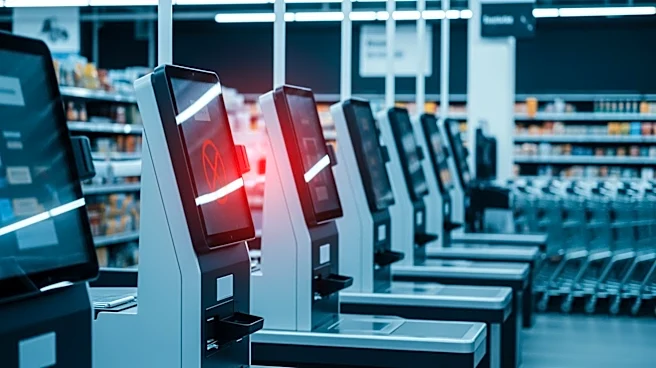
Connecticut lawmakers are debating a bill that would impose strict limits on the use of self-checkout systems in grocery stores. The proposed legislation seeks to cap the number of self-checkout machines per store and require nonunion stores to adopt
union policies to enhance customer service and worker protections. The bill would restrict self-checkout stations to eight per store, mandate one staffed checkout lane for every two automated stations, and require one employee for every two machines. This move could lead to increased operational costs for stores and reduced services for shoppers. The bill is part of a broader discussion on automation's impact on retail jobs and customer experience.
Why It's Important?
The proposed restrictions on self-checkout lanes in Connecticut could have significant implications for grocery stores and consumers. By limiting automation, the bill aims to protect jobs and improve service for vulnerable populations, such as seniors and individuals using complex transactions like SNAP or WIC. However, the experience of Long Beach, California, which implemented similar regulations, suggests that such mandates may lead to higher prices and longer lines for shoppers. The bill also highlights ongoing labor issues, as it could force nonunion stores to adopt union policies, potentially affecting staffing and operational flexibility.
What's Next?
If passed, Connecticut would be the first state to implement strict self-checkout regulations statewide. The bill's impact on local stores and their employees remains a contentious issue, with business groups warning of increased labor costs and reduced flexibility. Retailers may respond by cutting self-checkout options or limiting their use, which could frustrate customers and burden stores. The debate over the bill reflects broader concerns about automation's role in the retail industry and its effects on employment and consumer experience.