




What's Happening?
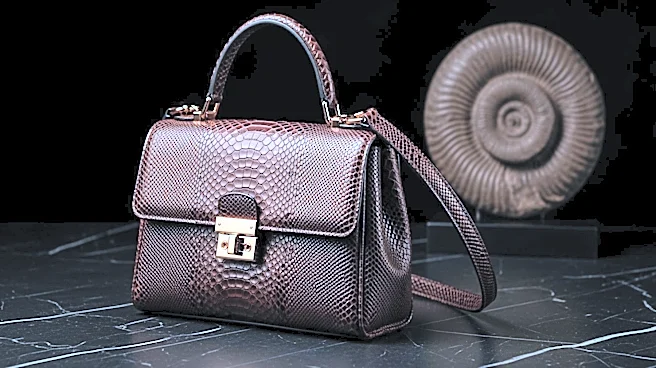
Polish fashion brand Enfin Levé has announced a luxury handbag purportedly made from 'lab-grown T-rex leather,' priced at nearly $600,000. The handbag, set to be auctioned in Paris, has sparked significant debate within the scientific community. The material
used in the handbag is claimed to be derived from a tissue sample of a 68-million-year-old T-rex bone found in Montana. However, experts are skeptical about the authenticity of the material, suggesting it may not be genuine dinosaur flesh. The leather is reportedly created using synthetic collagen, which combines a T-rex protein sequence with chicken protein. This has led some researchers to argue that the material is more chicken than dinosaur. The debate centers around the definition of 'T-rex leather' and whether the tissue sample used is indeed from a T-rex or merely a bacterial colony on the fossil.
Why It's Important?
The handbag's creation highlights the intersection of luxury fashion and scientific innovation, particularly in the realm of lab-grown materials. This development could have significant implications for the fashion industry, offering a cruelty-free alternative to traditional leather, which is often criticized for its environmental and ethical impacts. However, the skepticism from the scientific community raises questions about the authenticity and marketing of such products. If the material is not genuinely derived from a T-rex, it could undermine consumer trust and the perceived value of lab-grown luxury items. The situation also underscores the challenges of verifying the origins and authenticity of novel materials in the fashion industry.
What's Next?
The handbag's auction in Paris will likely draw attention from both the fashion and scientific communities. If the auction proceeds successfully, it could pave the way for more lab-grown luxury items, potentially transforming the market for high-end fashion. However, continued scrutiny from scientists may prompt further investigation into the claims made by Enfin Levé. The outcome of this debate could influence future regulations and standards for labeling and marketing lab-grown materials. Additionally, the fashion industry may need to address the ethical and transparency issues raised by such innovations.
Beyond the Headlines
This development raises broader questions about the role of technology in redefining luxury and authenticity. As lab-grown materials become more prevalent, the fashion industry may face a cultural shift in how value and authenticity are perceived. The use of synthetic biology in creating luxury items could challenge traditional notions of craftsmanship and rarity, potentially democratizing access to high-end fashion. However, it also poses ethical dilemmas regarding the manipulation of biological materials and the potential environmental impacts of synthetic production processes.