







What's Happening?
Norway achieved a historic victory by defeating Canada 3-2 in overtime during the bronze medal game at the ice hockey world championship. This win marks Norway's first-ever medal in the tournament's history. The decisive goal was scored by Noah Steen
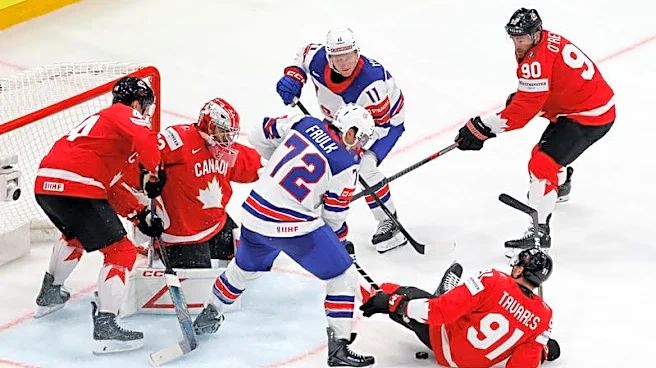
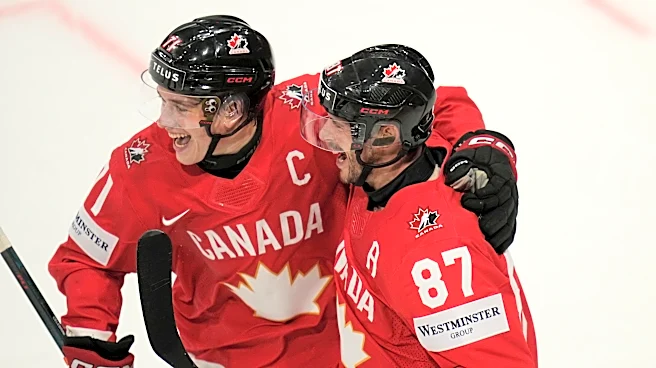
3:32 into overtime. Norway's previous best performance was a fourth-place finish in 1951. The game saw Canada trailing 2-0 before a dramatic comeback, with Robert Thomas scoring twice in the final moments to force overtime. Despite the efforts of Canadian players, including captain Macklin Celebrini and NHL stars like Sidney Crosby, Norway's goaltender Henrik Haukeland made 44 saves to secure the win. Canada, which has not won the championship since 2023, had to settle for the bronze medal game after losing to Finland in the semifinals.
Why It's Important?
This victory is significant for Norway as it marks a milestone in their ice hockey history, showcasing their growth and competitiveness on the international stage. For Canada, the loss highlights ongoing challenges in reclaiming their former dominance in the sport, despite having a roster filled with NHL talent. The outcome may prompt Canada to reassess its strategies and player development programs. The result also reflects the increasing parity in international ice hockey, where traditional powerhouses like Canada face stiff competition from emerging teams. This shift could influence future tournament dynamics and the global popularity of the sport.
What's Next?
Following this historic win, Norway will likely focus on building upon their success to become a consistent contender in future tournaments. For Canada, the focus will be on analyzing their performance and making necessary adjustments to regain their competitive edge. The conclusion of the world championship will also lead to evaluations by other participating nations, potentially influencing team strategies and player selections for upcoming international competitions. The final match between Switzerland and Finland will determine the gold medalist, further shaping the competitive landscape of international ice hockey.