



What's Happening?
The urban farming market is projected to experience significant growth from 2026 to 2033, driven by rising food security concerns and the adoption of sustainable food production solutions. Key players such as AeroFarms, Bowery Farming, Infarm, Plenty,
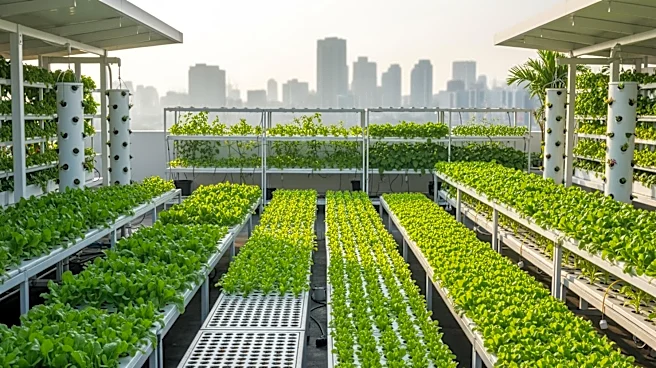
and BrightFarms are leading innovations in this sector. The market is expanding rapidly as cities adopt vertical farming, hydroponics, and controlled environment agriculture to produce crops year-round with minimal land and water usage. Technological advancements, including IoT-enabled monitoring and AI-driven crop analytics, are enhancing efficiency and productivity. The shift towards locally grown, pesticide-free produce is further accelerating market growth.
Why It's Important?
The expansion of urban farming addresses critical issues such as food security, environmental sustainability, and urbanization. By reducing dependency on traditional agriculture and long supply chains, urban farming can provide fresh produce to urban populations while minimizing environmental impact. This growth is supported by technological innovations that improve resource efficiency and crop yields. The market's development could lead to increased investment in urban agriculture infrastructure and create new opportunities for businesses and consumers seeking sustainable food options.
What's Next?
As the urban farming market continues to grow, key players are expected to expand their operations and integrate advanced technologies to enhance productivity. Strategic investments and partnerships will likely drive further innovation and scalability. Government initiatives and supportive policies may also play a crucial role in fostering the development of urban agriculture. Challenges such as high initial capital investment and energy consumption will need to be addressed to ensure sustainable growth. The market's evolution will depend on overcoming these hurdles and capitalizing on emerging opportunities.