





What's Happening?
Ohio has introduced Senate Bill 415, which imposes new regulations on the use of self-checkout lanes at large retail stores, including Walmart, Kroger, and Costco. The bill, introduced by State Senator Thomas Patton, mandates that these retailers must
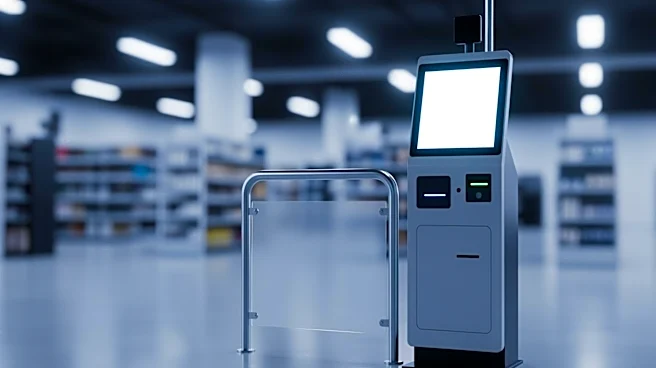
limit customer purchases to 15 items at self-checkout lanes and ensure that at least one staffed checkout is available. Additionally, self-checkout kiosks must be monitored by staff and positioned where they can be easily observed by police and employees. The legislation also prohibits the purchase of alcohol and tobacco through self-checkouts. Violations of these regulations could result in fines starting at $100 per employee present on the day of the offense, escalating to a maximum of $1,000 per employee per day if the violation continues. The bill aims to revise the state code regulating self-checkout procedures at retail pharmacies and food establishments larger than 15,000 square feet.
Why It's Important?
The introduction of Senate Bill 415 in Ohio reflects growing concerns over the use of self-checkout systems in large retail environments. By imposing these regulations, the state aims to address issues such as theft prevention, customer service quality, and employee oversight. The financial penalties associated with non-compliance could significantly impact major retailers, potentially leading to increased operational costs. This legislation may also influence other states to consider similar measures, affecting the retail industry's approach to self-service technology. Retailers may need to reassess their staffing and checkout strategies to comply with the new rules, which could lead to broader changes in how self-checkout systems are implemented nationwide.
What's Next?
As the bill progresses through the legislative process, major retailers like Walmart, Kroger, and Costco will likely need to prepare for potential operational changes. They may engage in discussions with lawmakers to address concerns or seek amendments to the bill. Retailers might also begin to adjust their self-checkout systems and staffing models to ensure compliance with the proposed regulations. If the bill is enacted, it could set a precedent for other states, prompting a reevaluation of self-checkout practices across the country. Stakeholders, including consumer advocacy groups and retail associations, may also weigh in on the implications of the bill, influencing its final form and implementation.