


What's Happening?
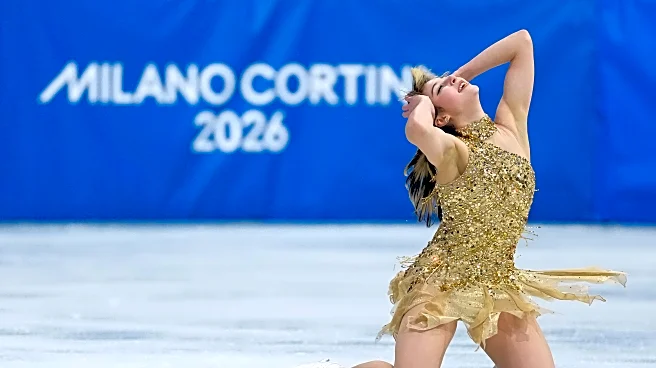
American figure skater Alysa Liu delivered an exceptional performance at the 2026 Milano Cortina Winter Olympics, earning a gold medal in the women's individual event. Her near-flawless free skate routine propelled her past Japanese competitors Kaori Sakamoto and Ami Nakai, marking the first U.S. women's individual gold in figure skating in 24 years. Liu's teammate, Amber Glenn, finished fifth after a strong comeback in the free skate, having been in 13th place due to an invalid element in her short program. Both skaters discussed the pressures of Olympic competition, with Liu's return to the sport after a temporary retirement at age 16 highlighting her renewed joy and carefree approach. Glenn praised Liu's attitude, suggesting it could influence
a healthier approach to the sport among athletes.
Why It's Important?
Alysa Liu's victory is significant not only for its historical context—being the first U.S. women's individual gold in figure skating in over two decades—but also for its potential impact on the sport's culture. Liu's approach, characterized by a focus on joy and personal fulfillment, contrasts with the often intense pressure associated with competitive figure skating. This shift could inspire a new generation of skaters to prioritize mental health and personal growth alongside athletic achievement. Liu's story of resilience and her message to aspiring skaters to forge their own paths may encourage broader changes in how athletes approach their careers, potentially leading to a more supportive and sustainable environment in the sport.
What's Next?
Following her gold medal win, Alysa Liu is set to participate in the Milano Cortina exhibition gala, providing another opportunity to showcase her skills and influence. The broader figure skating community may begin to adopt Liu's approach, emphasizing mental well-being and personal expression. As Liu continues to inspire, there could be increased dialogue within the sport about balancing competitive success with personal happiness. Stakeholders, including coaches and sports organizations, might consider integrating these values into training programs, potentially reshaping the future of figure skating.