



What's Happening?
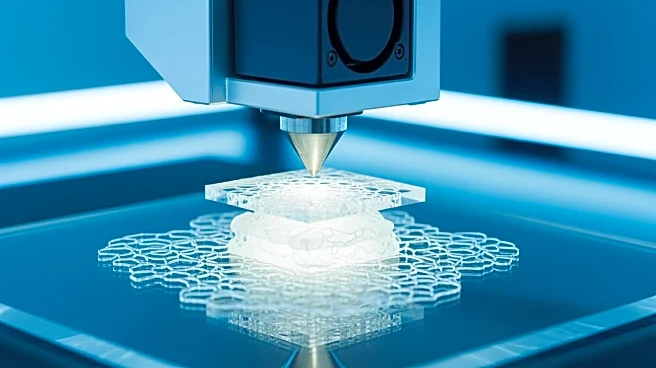
Recent advancements in 3D bioprinting are revolutionizing drug testing and disease modeling by providing more accurate in vitro models that replicate the complex architecture and function of human tissues. This approach overcomes the limitations of traditional
2D cultures and animal models, offering a more reliable method for evaluating drug efficacy and safety. The review highlights three principal bioprinting modalities: jetting-based, extrusion-based, and vat photopolymerization, each with unique capabilities for creating functional tissue models. These biofabricated constructs support architectural heterogeneity and functional perfusion networks, essential for nutrient exchange and hemodynamic simulation. The FDA's Center for Drug Evaluation and Research (CDER) may accept these bioprinted models for evaluating drug-induced liver injury, provided they meet specific regulatory requirements.
Why It's Important?
The development of 3D bioprinting technologies is significant as it offers a potential reduction in the reliance on animal testing, aligning with ethical considerations and regulatory pressures to find alternative testing methods. These advanced models can provide more accurate predictions of human responses to drugs, potentially reducing the time and cost associated with drug development. By improving the fidelity of preclinical testing, these technologies could accelerate the approval of new therapies, benefiting pharmaceutical companies and patients alike. The ability to create patient-specific models also opens new avenues for personalized medicine, allowing for tailored treatment strategies that could improve patient outcomes.
What's Next?
As 3D bioprinting technologies continue to evolve, further validation studies are needed to ensure these models meet regulatory standards for drug testing. The integration of human-derived cells in these models is crucial to mitigate species-specific discrepancies found in animal models. Ongoing research will focus on enhancing the biological relevance and complexity of these models, ensuring they can accurately mimic human tissue responses. The adoption of these technologies by regulatory bodies like the FDA will be a critical step in their widespread implementation in drug development processes.
Beyond the Headlines
The shift towards 3D bioprinting in drug development could have broader implications for the biotechnology and pharmaceutical industries. It may lead to a paradigm shift in how new drugs are tested and approved, emphasizing the need for regulatory frameworks to adapt to these technological advancements. Additionally, the ethical implications of reducing animal testing could influence public perception and acceptance of new therapies. Long-term, these technologies could pave the way for organ-scale biomanufacturing, potentially addressing the shortage of transplantable organs.