







What's Happening?
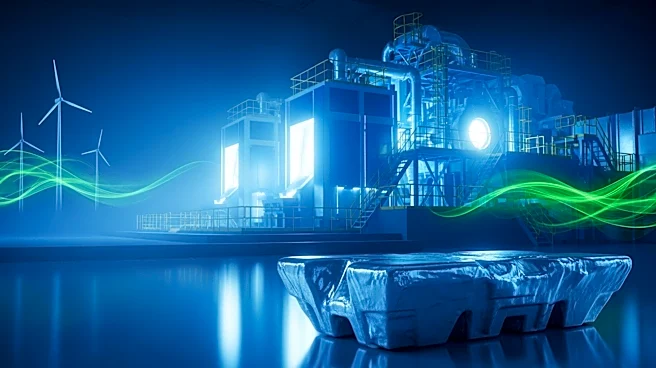
Rio Tinto is investing $1.5 billion to expand its low-carbon aluminium smelting operations at the Complexe Arvida facility in Saguenay, Quebec. This expansion involves the commissioning of 96 new AP60 electrolytic reduction cells, which will increase
the facility's annual production capacity by approximately 160,000 metric tonnes, bringing the total AP60 output to around 220,000 metric tonnes per year. The project is expected to reduce annual CO2-equivalent emissions by about 290,000 tonnes, thanks to the replacement of older, higher-intensity infrastructure with more efficient AP60 technology. The expansion is also projected to create over 1,500 construction jobs and provide ongoing employment for approximately 100 workers. The use of Quebec's hydroelectric power, which accounts for 99% of the province's electricity, significantly lowers the carbon footprint of the aluminium produced, making it one of the cleanest in the world.
Why It's Important?
This expansion is significant as it positions Rio Tinto at the forefront of the global shift towards low-carbon industrial production. The use of AP60 technology, combined with Quebec's clean hydroelectric power, allows for a substantial reduction in emissions, aligning with global efforts to combat climate change. The project not only supports environmental goals but also strengthens Quebec's economic position by creating jobs and boosting local industry. Additionally, the expansion serves as a strategic response to trade pressures, enhancing domestic production capacity and reducing reliance on cross-border supply chains. This dual focus on decarbonization and economic resilience reflects a broader trend in industrial policy, where environmental and economic objectives are increasingly intertwined.
What's Next?
The full commissioning of the new AP60 pots is expected to be completed by the end of 2026. As the expansion progresses, Rio Tinto will continue to develop its ELYSIS technology, a joint venture with Alcoa aimed at creating carbon-free aluminium production through inert anode technology. This next-generation technology could further reduce emissions by eliminating CO2 production during the smelting process. The Canadian government's investment in ELYSIS underscores the strategic importance of advancing this technology. As global demand for low-carbon aluminium grows, particularly from industries like automotive and aerospace, Rio Tinto's expanded capacity and technological advancements position it to meet these demands effectively.
Beyond the Headlines
The expansion of the Complexe Arvida facility highlights the critical role of clean energy in industrial decarbonization. By leveraging Quebec's hydroelectric power, Rio Tinto not only reduces its carbon footprint but also sets a benchmark for sustainable aluminium production. This project exemplifies how regional energy resources can be harnessed to achieve global environmental goals. Furthermore, the investment reflects a broader shift in corporate strategy, where companies are increasingly prioritizing sustainability and resilience in their operations. As industries face mounting pressure to reduce emissions, projects like this could serve as a model for integrating environmental and economic objectives.