



What's Happening?
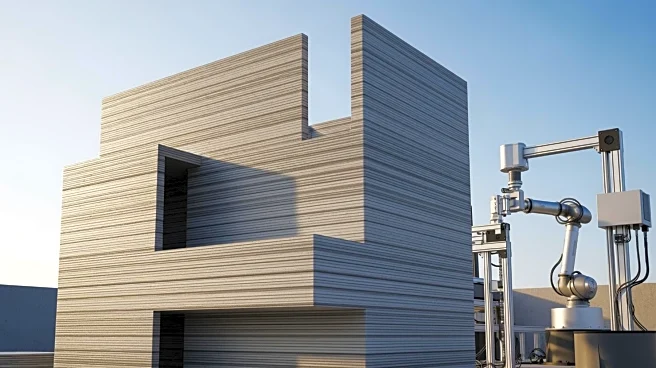
Walmart has embarked on its third 3D construction printing (3DCP) project in Lamar, Missouri, utilizing Alquist 3D robotic technology. This initiative follows a previous project in Athens, Tennessee, where an 8,000-square-foot addition was constructed using the same technology. The Missouri project is part of a broader plan involving over a dozen similar projects across the U.S. Alquist has partnered with equipment rental dealer Hugg & Hall and general contractor FMGI to facilitate these projects. FMGI will lease Alquist A1X printers, which are financed and serviced by Hugg & Hall, to execute large-scale 3D-printed projects nationwide. This collaboration allows Alquist to expand its reach by selling, leasing, and renting its proprietary equipment and training
methods to the construction industry.
Why It's Important?
The adoption of 3D construction printing by a major retailer like Walmart marks a significant shift in the construction industry, highlighting the scalability and practicality of this technology. By partnering with Alquist, Walmart is not only enhancing its construction efficiency but also promoting sustainable building practices. This move could potentially reduce construction costs and time, offering a competitive edge in the retail sector. The collaboration with FMGI and Hugg & Hall further underscores the growing acceptance and integration of 3DCP in mainstream construction, potentially influencing other industries to adopt similar technologies.
What's Next?
As Walmart and Alquist continue to roll out 3DCP projects, the construction industry may see increased interest and investment in this technology. Alquist plans to expand its educational partnerships to train future workers, which could lead to a more skilled workforce adept in sustainable building solutions. The success of these projects could encourage other retailers and construction companies to explore 3DCP, potentially leading to widespread adoption and innovation in construction methods.
Beyond the Headlines
The integration of 3DCP in construction could have long-term implications for urban development and housing affordability. By reducing construction time and costs, this technology could make housing more accessible and affordable. Additionally, the environmental benefits of 3DCP, such as reduced waste and energy consumption, align with global sustainability goals, potentially influencing policy and regulatory frameworks in the construction industry.