






What's Happening?
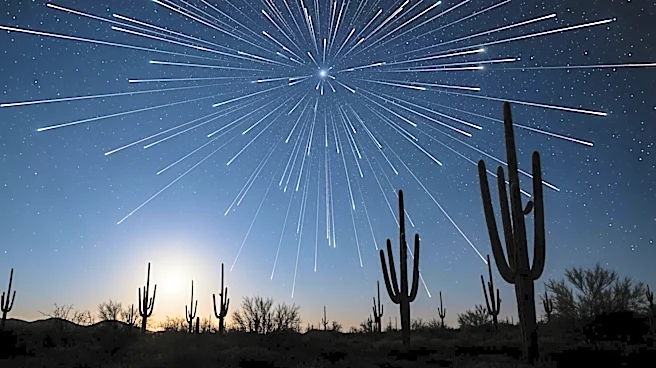
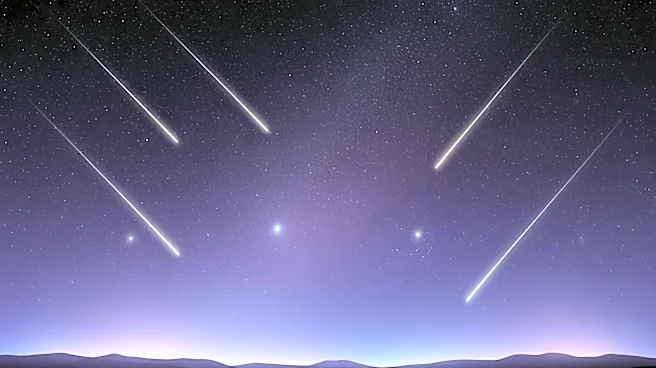
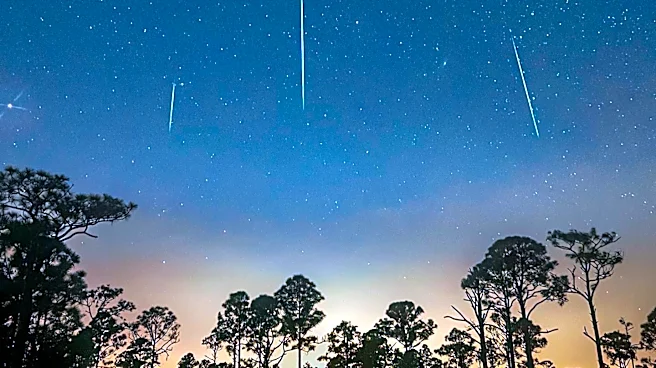
The Eta Aquarids meteor shower, originating from Halley’s comet, is currently active and will peak between May 5-6, continuing until May 28. This meteor shower is known for its fast-moving meteors and bright trails, with up to 50 meteors visible per hour
during its peak. However, this year, the viewing experience is challenged by the waning gibbous moon, which causes significant light pollution, making smaller meteors difficult to see. Despite this, larger meteors, known as bolides, are expected to remain visible and provide a spectacular show. Astrophotographer Andrew McCarthy advises stargazers to find dark, clear skies away from city lights and to allow their eyes to adjust to the darkness for optimal viewing.
Why It's Important?
Meteor showers like the Eta Aquarids offer a unique opportunity for people to connect with the universe and experience a natural phenomenon that highlights Earth's interaction with space. This event encourages public interest in astronomy and provides a chance for educational outreach about celestial events. Additionally, it serves as a reminder of the importance of preserving dark skies, which are increasingly threatened by urban light pollution. The shower also offers a moment of reflection and perspective, allowing individuals to disconnect from digital distractions and engage in a meditative experience under the stars.
What's Next?
As the Eta Aquarids continue until May 28, stargazers have multiple opportunities to witness the meteor shower, especially on nights when the moon is less bright. Observers are encouraged to plan their viewing sessions around weather conditions and moon phases to maximize their chances of seeing meteors. The event may also inspire future interest in upcoming meteor showers and celestial events, fostering a greater appreciation for astronomy and the natural world.
Beyond the Headlines
The Eta Aquarids meteor shower not only provides a visual spectacle but also raises awareness about the impact of light pollution on astronomical observations. Efforts to reduce light pollution can enhance the visibility of such events and preserve the natural night sky for future generations. Additionally, the cultural tradition of 'wishing on a star' during meteor showers, although scientifically inaccurate, continues to capture the imagination and adds a layer of cultural significance to the experience.