





What's Happening?
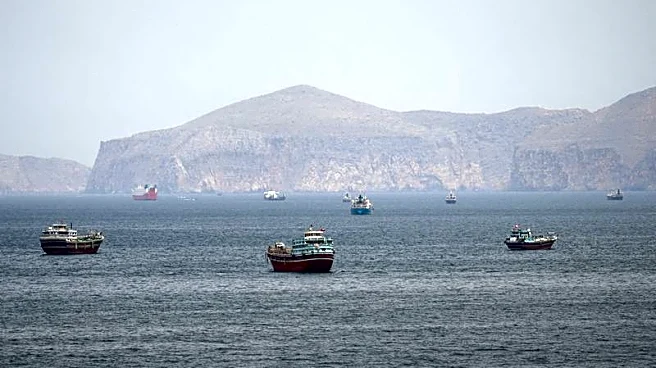
Goldman Sachs has reported a significant decline in global oil demand, which poses risks to its price forecasts for Brent and WTI crude. The bank estimates a reduction of 4 to 5 million barrels per day in April, largely due to the closure of the Strait
of Hormuz, which has decreased global demand by 4% to 5%. This decline is attributed to weaker consumption in China and Western Europe. Despite the demand drop, there are potential upside risks if the strait remains closed and global supplies decrease further. Current oil prices have seen a decline, with Brent crude futures settling at $93.09 per barrel.
Why It's Important?
The decline in global oil demand has significant implications for the energy market and broader economic conditions. A sustained decrease in demand could lead to lower oil prices, impacting oil-producing countries and companies. Conversely, if supply constraints persist, prices could rise, affecting global economic stability and inflation rates. The situation highlights the vulnerability of global oil markets to geopolitical events, such as the closure of strategic chokepoints like the Strait of Hormuz. This development could influence energy policies and strategies, as countries and companies seek to mitigate risks associated with supply disruptions.
What's Next?
The future of oil prices will largely depend on geopolitical developments, particularly the status of the Strait of Hormuz. If the strait remains closed, further supply disruptions could lead to increased volatility in oil prices. Stakeholders, including governments and energy companies, may need to reassess their strategies to ensure energy security and economic stability. Additionally, the situation could accelerate the transition to alternative energy sources as countries seek to reduce their dependence on oil. Monitoring the situation closely will be crucial for investors and policymakers to navigate the potential impacts on the global economy.