
What's Happening?
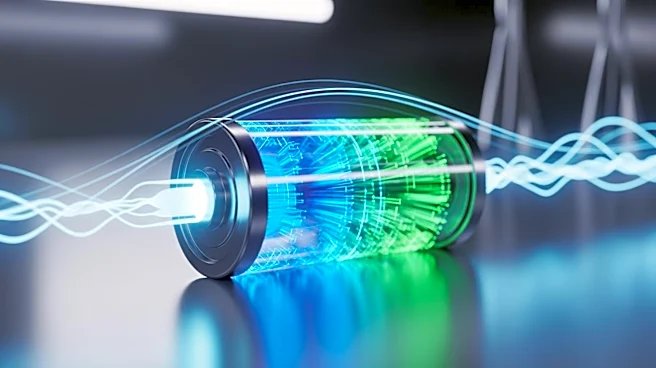
SoftBank has announced plans to build a new battery storage business under its mobile network operator unit, SoftBank Corp. The initiative involves the creation of a battery plant in Sakai City, Osaka
Prefecture, with an initial capacity of one gigawatt-hour per year. This capacity could expand to multiple gigawatt-hours in the future, making it one of the largest battery plants in Japan. The plant is expected to begin initial production in March 2028, with mass production targeted for 2029. Initially, the batteries will support SoftBank's AI data centers, but the company plans to expand its offerings to commercial customers for grid applications, industrial uses, and residential purposes. SoftBank has partnered with South Korean companies Cosmos Lab and DeltaX Co. to develop and manufacture the battery technologies.
Why It's Important?
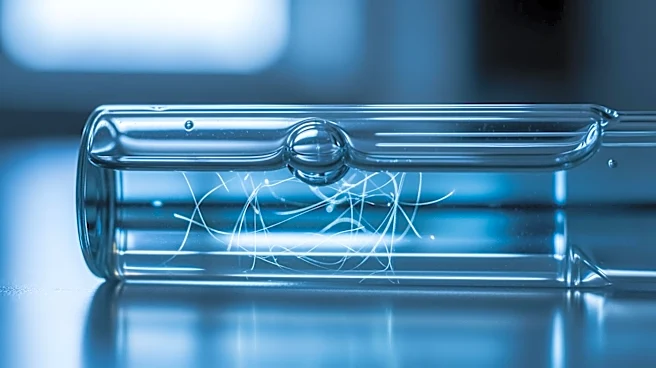
The establishment of this battery plant is significant as it aligns with SoftBank's broader strategy to support its AI data center ambitions. By producing its own batteries, SoftBank can ensure a stable supply of energy storage solutions, which is crucial for the operation of data centers that require reliable power sources. Additionally, the expansion into commercial markets could position SoftBank as a key player in the energy storage industry, potentially generating significant revenue. The collaboration with Cosmos Lab and DeltaX Co. also highlights the importance of international partnerships in advancing battery technology, particularly in developing safer and more efficient alternatives to traditional lithium-ion batteries.
What's Next?
As SoftBank progresses with its battery plant, the company will likely focus on scaling up production capabilities and expanding its market reach. The success of this venture could encourage further investments in battery technology and energy storage solutions, both within Japan and globally. Stakeholders, including commercial and industrial customers, may closely monitor SoftBank's developments to assess potential partnerships or adoption of the new battery technologies. Additionally, regulatory approvals and market conditions will play a crucial role in the plant's operational timeline and expansion plans.