



What's Happening?
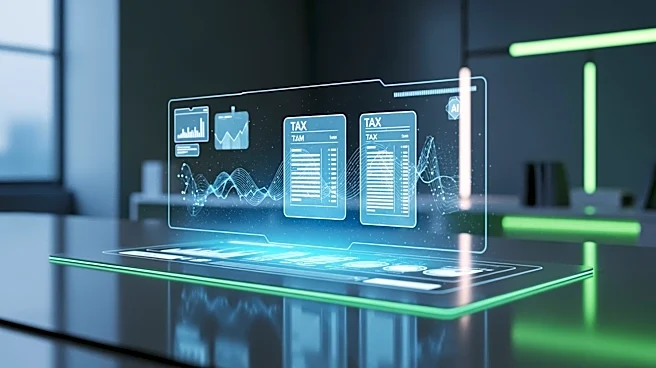
The tax and accounting industry is on the brink of a significant transformation with the introduction of agentic AI systems. These systems represent a major advancement from traditional search-and-retrieve models, enabling tax professionals to integrate
reasoning and workflow automation into their processes by 2026. This evolution is expected to streamline tax research, analysis, and documentation, allowing for more efficient and precise handling of complex tasks. The shift from physical to digital research platforms has already improved speed and precision, but the core workflows have remained unchanged. Agentic AI aims to change this by supporting professional judgment and enhancing the quality of client deliverables.
Why It's Important?
The integration of agentic AI into tax workflows is poised to revolutionize the industry by amplifying professional judgment rather than replacing it. This technological advancement will allow tax professionals to scale expertise, reduce variability in work quality, and improve client satisfaction through faster and more accurate deliverables. As firms adopt these AI capabilities, they can redirect resources from routine tasks to higher-value advisory services, gaining a competitive edge in efficiency and quality. The transformation aligns with the industry's need to navigate increasing regulatory complexity with greater confidence and efficiency.
What's Next?
As the tax and accounting industry embraces agentic AI, firms that integrate these capabilities early will likely gain substantial advantages. The focus will be on systematically amplifying professional expertise, allowing professionals to provide strategic counsel that drives client success. The evolution of tax tools will continue to support human judgment, ensuring that professionals can focus on delivering high-quality advisory services. The future of tax and accounting work will be about enhancing professional capabilities, not eliminating them.