

What's Happening?
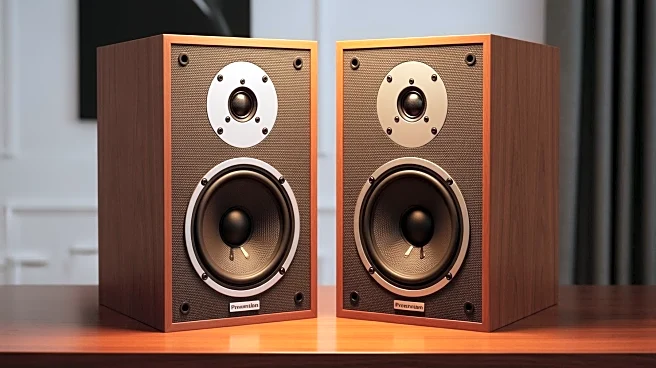
JBL has announced a special edition of its L100 Classic MKII loudspeakers to commemorate the brand's 80th anniversary. The L100 Classic 80 retains the three-way design, drivers, and tuning of its predecessor but introduces a new aesthetic. The speakers feature vintage-inspired brown Quadrex foam grilles and a natural wood veneer, with gold-and-black JBL logos and badges marking them as special editions. Production is limited to 800 matched pairs, making them a collector's item for audiophiles. This release is part of a broader trend of tech companies revisiting and updating classic designs to appeal to both nostalgic consumers and new audiences.
Why It's Important?
The release of the JBL L100 Classic 80 highlights a growing trend in the tech industry where companies
are leveraging nostalgia to drive sales. By reimagining classic products with modern updates, brands can tap into the emotional connections consumers have with past products while also attracting new customers. This strategy can be particularly effective in the competitive audio market, where brand heritage and product legacy play significant roles in consumer purchasing decisions. The limited production run also creates a sense of exclusivity, potentially increasing demand and allowing JBL to maintain a premium pricing strategy.
What's Next?
As JBL continues to celebrate its 80th anniversary, it may explore additional product releases or collaborations that capitalize on its rich history. The success of the L100 Classic 80 could encourage other tech companies to adopt similar strategies, revisiting and updating their own iconic products. Additionally, consumer response to this release will likely influence JBL's future product development and marketing strategies, potentially leading to more limited edition releases or retro-inspired designs.
Beyond the Headlines
The introduction of the L100 Classic 80 also raises questions about sustainability and the lifecycle of consumer electronics. As companies revisit older designs, there is an opportunity to incorporate sustainable materials and manufacturing processes, aligning with growing consumer demand for environmentally responsible products. This could set a precedent for how legacy brands approach product development in the future, balancing nostalgia with modern sustainability practices.