







What's Happening?
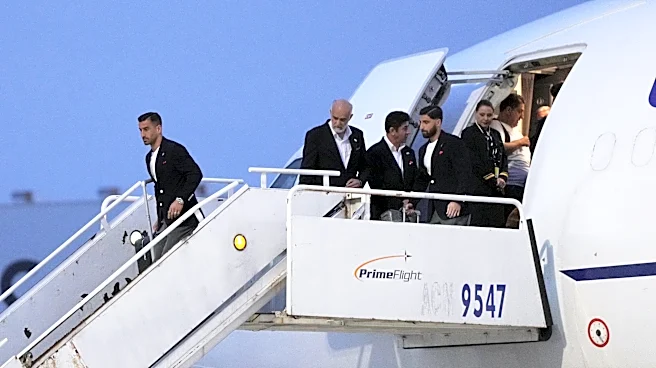
Iran's World Cup soccer team arrived in Tijuana, Mexico, wearing gold-colored lapel pins with the number '168' to honor the victims of a missile strike on an elementary school in Minab, Iran. The strike, which occurred on February 28, resulted in the deaths
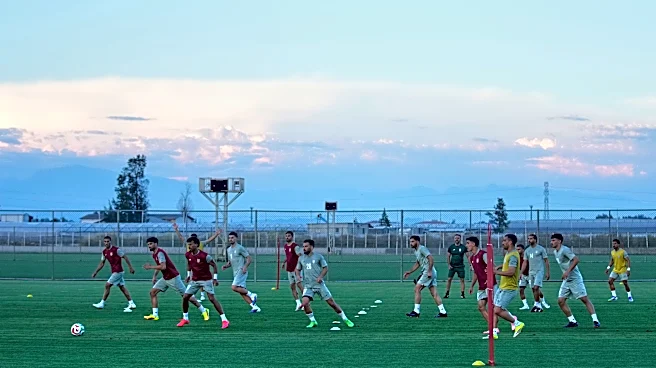
of 168 people, mostly children. The attack, likely launched by the U.S., has been condemned by the United Nations and human rights groups. The U.S. military is investigating the incident and has stated it would never target civilians. Iran's team is using Mexico as a training base for their upcoming World Cup matches in the U.S., as visa processing delays have affected their plans.
Why It's Important?
The gesture by Iran's team highlights ongoing tensions between Iran and the U.S., particularly in the context of international sports events. The pins serve as a reminder of the human cost of military conflicts and the diplomatic challenges they pose. The situation underscores the complexities of international relations, where sports can become a platform for political statements. The U.S.'s involvement in the strike, whether direct or indirect, could impact its diplomatic standing and relations with Iran, especially as both countries navigate the geopolitical landscape.
What's Next?
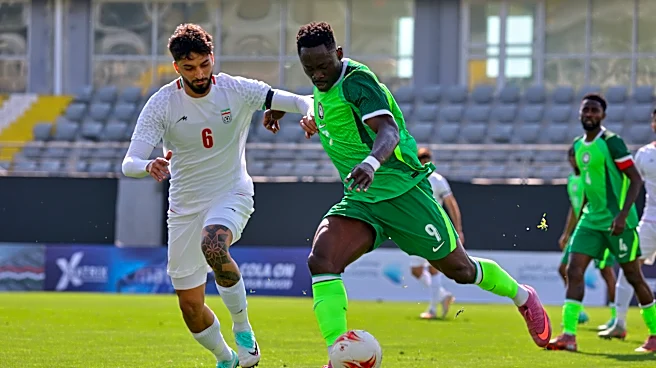
Iran's team is scheduled to play their group-stage games in the U.S., with their first match against New Zealand on June 15 in Inglewood, California. The team plans to return to Tijuana between games and will face Belgium and Egypt in subsequent matches. The possibility of Iran and the U.S. meeting in the round of 32 adds another layer of complexity to the event, as both teams could face each other in Texas if they advance.