






What's Happening?
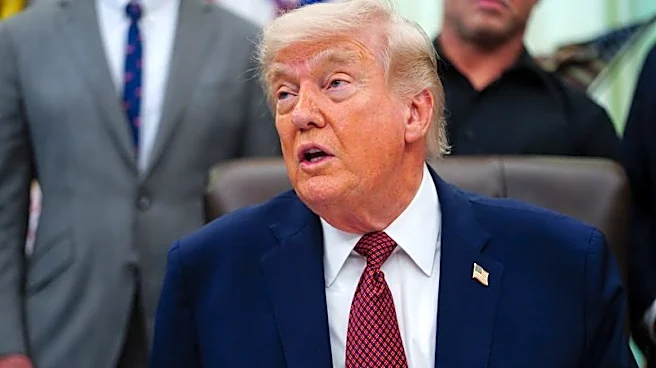
U.S. Treasury Secretary Scott Bessent announced that Gulf and Asian allies have requested currency swap lines from the United States to mitigate the economic impact of energy shocks and Middle East conflicts. Bessent highlighted that both the U.S. and the United Arab
Emirates would benefit from such a swap line, which President Trump is considering. These swap lines are intended to stabilize financial markets and prevent disorderly sales of U.S. assets. The Treasury previously provided Argentina with a $20 billion currency swap to stabilize its peso during a tumultuous election period, which has since been repaid.
Why It's Important?
The request for currency swap lines reflects the economic vulnerabilities faced by countries in the Gulf and Asia due to ongoing conflicts in the Middle East. Such financial arrangements can provide a safety net, helping to stabilize currencies and prevent economic crises. For the U.S., establishing swap lines with strategic partners like the UAE could strengthen economic ties and enhance geopolitical influence in the region. However, these actions also highlight the interconnectedness of global financial systems and the potential for regional conflicts to have widespread economic repercussions.
What's Next?
If approved, the currency swap lines could lead to increased financial cooperation between the U.S. and its allies, potentially stabilizing markets affected by Middle East tensions. The U.S. Treasury and Federal Reserve may continue to evaluate the need for similar arrangements with other countries. Additionally, the situation may prompt discussions on broader economic strategies to address the impacts of geopolitical conflicts on global markets.