






What's Happening?
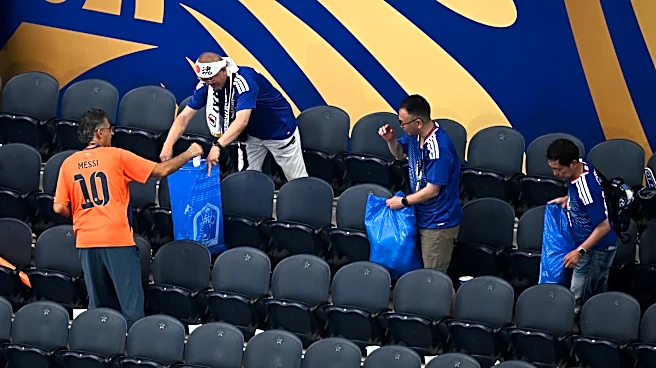
Japanese fans attending the World Cup match between Japan and the Netherlands in Texas showcased their cultural practice of cleanliness by tidying up the stadium after the game. Following the 2-2 draw, spectators remained in the stands to meticulously
collect litter, placing it into blue plastic bags. This behavior is deeply rooted in Japanese culture, where individuals are taught from a young age to leave spaces cleaner than they found them. NFL quarterback Jameis Winston was also seen participating in the clean-up, donning a blue Japan shirt. Sociologist Masachi Ohsawa attributes this behavior to a mix of social responsibility and peer pressure, emphasizing the Japanese sensitivity to moral considerations in shared spaces.
Why It's Important?
The actions of Japanese fans highlight a cultural practice that contrasts with typical stadium behavior seen in many other countries. This demonstration of responsibility and respect for shared spaces can influence global perceptions of Japanese culture, potentially encouraging similar practices elsewhere. The event underscores the importance of cultural education and the impact of societal norms on behavior. For the U.S., hosting international events like the World Cup provides an opportunity to observe and learn from diverse cultural practices, which can enhance community engagement and environmental responsibility.
What's Next?
As Japan continues in the World Cup, their fans are expected to maintain this practice of cleaning up after games. Their next match against Tunisia in Mexico will likely see a repeat of this behavior, further solidifying their reputation for cleanliness. This ongoing demonstration may inspire other fan groups and event organizers to adopt similar practices, promoting a cleaner and more respectful environment at large-scale events. The influence of Japanese fans could lead to increased awareness and implementation of sustainable practices in sports venues across the U.S. and beyond.
Beyond the Headlines
The Japanese fans' actions at the World Cup reflect broader cultural values that prioritize community and environmental stewardship. This behavior is not just about cleanliness but also about setting an example for future generations. The practice of 'reading the air,' or understanding social cues, plays a significant role in encouraging collective action. This cultural insight offers a valuable lesson in how societal norms can drive positive behavior, potentially leading to long-term shifts in how public spaces are maintained and respected globally.