


What's Happening?
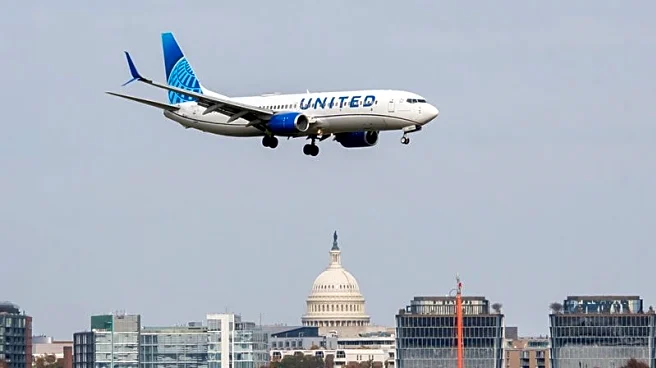
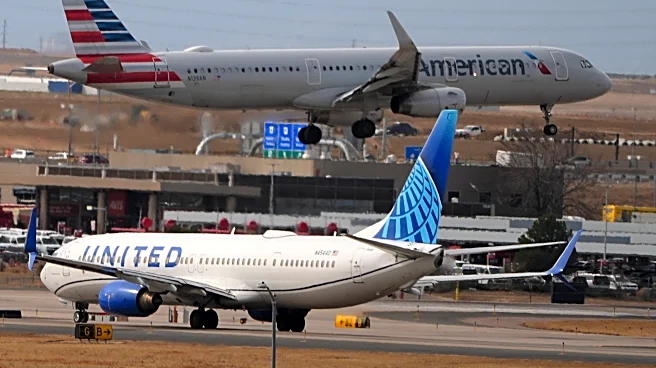
United Airlines has announced a reduction of approximately 5% in its scheduled flights for the year due to escalating jet fuel prices. The decision was communicated by CEO Scott Kirby, who highlighted the financial impact of the surge in fuel costs, attributing
it to ongoing conflicts in the Middle East. Kirby noted that if fuel prices remain at current levels, the airline could face an additional $11 billion in annual expenses solely for jet fuel. Despite the cutbacks, United Airlines plans to restore its full flight schedule by the fall.
Why It's Important?
The reduction in flights by United Airlines underscores the significant impact of global geopolitical tensions on the aviation industry. Rising fuel costs can lead to increased operational expenses, which may affect ticket prices and profitability for airlines. This move by United Airlines could influence other carriers to reassess their flight schedules and pricing strategies. The decision also highlights the vulnerability of the airline industry to external factors such as fuel price volatility, which can have broader economic implications, including potential effects on tourism and business travel.
What's Next?
United Airlines aims to restore its full flight schedule by the fall, contingent on fuel price stabilization. The airline will likely monitor geopolitical developments closely, as these could further influence fuel costs and operational decisions. Stakeholders, including passengers and industry competitors, will be watching for any changes in ticket pricing or service offerings. Additionally, there may be discussions within the industry regarding strategies to mitigate the impact of fuel price fluctuations, such as fuel hedging or exploring alternative energy sources.