
What's Happening?
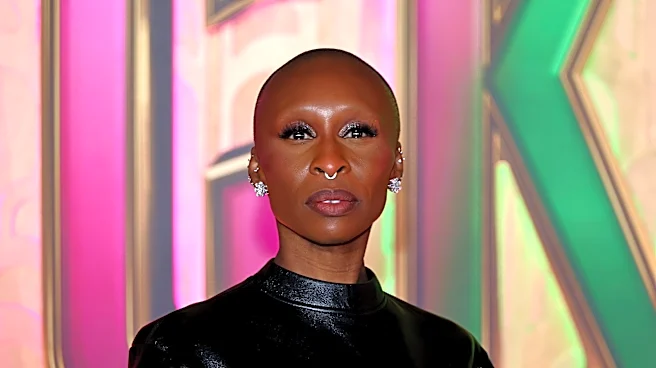
Cynthia Erivo, co-star of the film 'Wicked: For Good,' has spoken out about the public's reaction to an incident at the Singapore premiere where she intervened to protect Ariana Grande from an intruder.
The incident involved a man named Johnson Wen, who breached security and grabbed Grande. Erivo's actions were met with mixed reactions on social media, with some labeling her as Grande's 'bodyguard.' Erivo has expressed that these reactions highlight a deeper societal issue regarding the perception of Black women. She noted that assumptions about her physical appearance and role were influenced by racial biases, which she finds troubling. The incident has also affected her willingness to campaign for Oscars, as she feels her actions were misinterpreted due to these biases.
Why It's Important?
The incident and subsequent reactions underscore ongoing issues of racial bias and stereotypes, particularly concerning Black women. Erivo's experience highlights how societal perceptions can distort the narrative around actions taken by individuals based on their race and appearance. This situation brings attention to the broader conversation about racial equality and the need for societal change in how different groups are perceived and treated. The impact on Erivo's career decisions, such as her reluctance to campaign for awards, illustrates the personal and professional consequences of such biases. This case serves as a reminder of the importance of addressing and challenging racial stereotypes in all areas of society, including the entertainment industry.
What's Next?
Following the incident, there may be increased discussions within the entertainment industry about how racial biases affect public perception and career opportunities for Black women. Stakeholders in the industry might consider implementing measures to address these biases and support diversity and inclusion. Additionally, the incident could prompt further dialogue about security measures at public events to ensure the safety of celebrities and attendees. Erivo's decision not to campaign for Oscars may also influence other actors facing similar biases, potentially leading to broader industry changes in how award campaigns are conducted.
Beyond the Headlines
The incident with Erivo and Grande also raises questions about the role of social media in shaping public perception and the potential for it to perpetuate stereotypes. The rapid spread of reactions and labels on platforms like Twitter can amplify biases and influence public opinion. This highlights the need for more responsible use of social media and greater awareness of its impact on individuals' reputations and mental health. Furthermore, the situation reflects the ongoing challenge of achieving true equality and representation in the entertainment industry, where racial and gender biases continue to affect opportunities and recognition.