



What's Happening?
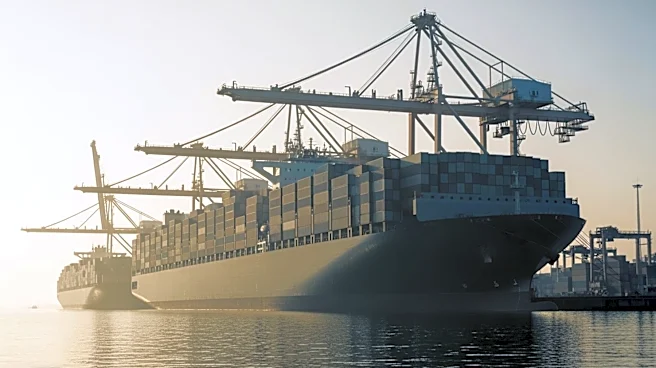
Port Tampa Bay recently welcomed the ZIM Canada, a container vessel that set a new record for carrying capacity at the port. The ship docked with 11,900 twenty-foot equivalent units (TEUs), surpassing previous records by nearly 2,000 TEUs. This arrival
highlights the port's growing role in accommodating larger, high-capacity container ships. The vessel, measuring 1,083 feet in length and 158 feet wide, is the largest by gross tonnage ever to dock at the port, weighing 114,643 gross tons. The port is advancing its largest project in history, the deepening of the shipping channel from 43 feet to 47 feet, set to begin construction in 2027. This $1.3 billion project aims to extend the entrance channel by 1.9 miles, remove 22 million cubic feet of material, and improve access for deeper-draft vessels. U.S. Rep. Kathy Castor joined port leadership to announce $10 million in federal funding for the Tampa Harbor Navigation Improvement Project, supporting initial planning, engineering, and design.
Why It's Important?
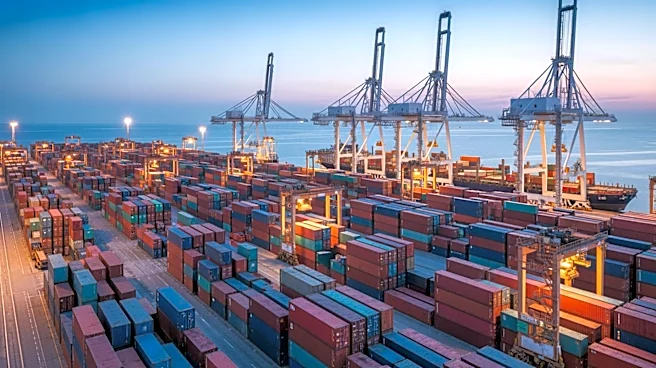
The arrival of the ZIM Canada and the ongoing infrastructure projects at Port Tampa Bay are significant for several reasons. Firstly, they underscore the port's strategic importance in handling larger vessels, which is crucial for maintaining competitiveness with other Gulf Coast ports. The deepening of the shipping channel will enhance the port's capacity to accommodate deeper-draft vessels, thereby strengthening supply chains across Florida. Additionally, the federal funding for the Tampa Harbor Navigation Improvement Project reflects governmental support for enhancing port infrastructure, which is vital for economic growth in the region. The port's expansion is expected to provide long-term benefits to the West Central Florida economy, supporting increased cargo volumes and boosting local industries.
What's Next?
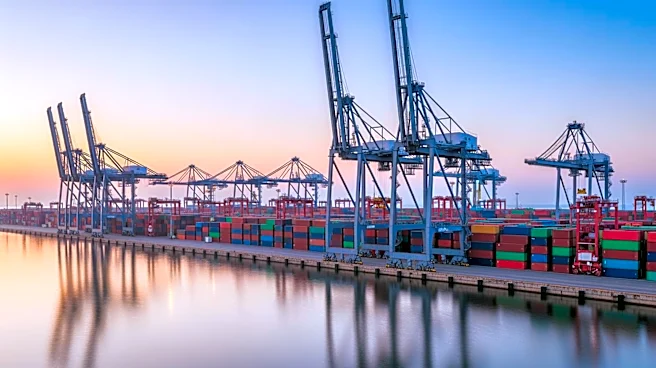
Port Tampa Bay is preparing for expanded crane capabilities, with six post-Panamax cranes expected to be operational by the end of 2026. The ongoing channel deepening and container infrastructure investments will continue to meet growing demand and maintain competitiveness. The port's leadership is focused on ensuring that these developments provide long-term economic benefits for the region. As the port continues to grow, it will play a vital role in supporting Florida's economy, particularly in handling petroleum products, dry bulk commodities, and other cargo types.