



What's Happening?
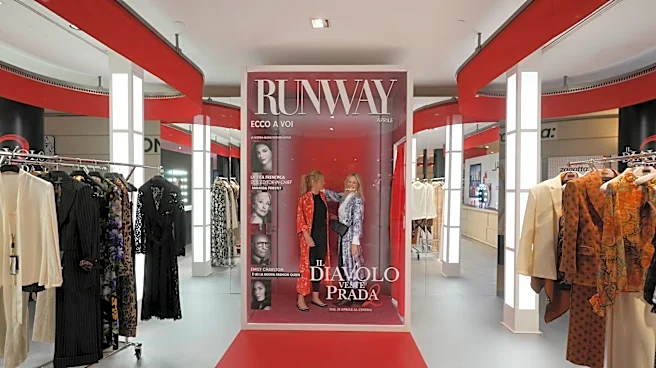
The director of 'The Devil Wears Prada 2', David Frankel, revealed that he considered including Adrian Grenier for a cameo in the sequel but ultimately decided against it due to scheduling conflicts. The film, set to premiere on May 1, reunites Anne Hathaway,
Meryl Streep, Emily Blunt, and Stanley Tucci, as their characters navigate the challenges of Runway Magazine in a changing media landscape. Grenier expressed disappointment at not being included, citing backlash against his character Nate as a possible reason. Fans have criticized Nate's behavior in the original film, which left his relationship with Andy unresolved.
Why It's Important?
The absence of Adrian Grenier's character Nate in 'The Devil Wears Prada 2' highlights the evolving dynamics of character development and audience expectations in film sequels. The decision reflects the impact of fan feedback on casting choices, as Nate's character faced criticism for his perceived selfishness. This development underscores the importance of audience engagement and the influence of social media in shaping film narratives. The sequel's focus on adapting to a changing media landscape also mirrors real-world challenges faced by traditional publications, emphasizing the relevance of the storyline.
What's Next?
With the film's release imminent, audiences will soon see how the characters adapt to the evolving media industry. The absence of Nate may lead to discussions about character arcs and potential spinoffs, as suggested by Grenier. The film's reception could influence future casting decisions and narrative directions in the franchise. Additionally, the portrayal of Runway Magazine's struggles may resonate with real-world media companies, prompting reflections on adaptation strategies in the industry.
Beyond the Headlines
The decision to exclude Nate from the sequel may reflect broader cultural shifts in how relationships and career ambitions are portrayed in media. The criticism of Nate's character highlights changing societal attitudes towards gender roles and career prioritization. This could lead to more nuanced portrayals of relationships in future films, aligning with contemporary values. The film's exploration of media adaptation also raises questions about the sustainability of traditional publishing models in the digital age.