
What's Happening?
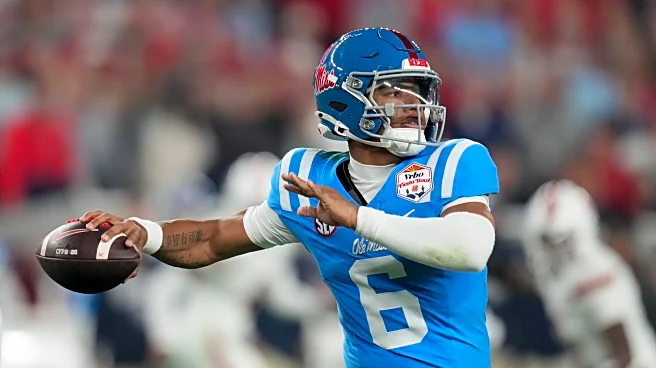
The Mississippi Supreme Court has denied the NCAA's petition to appeal a ruling that grants Ole Miss quarterback Trinidad Chambliss an additional year of eligibility. This decision follows a February injunction that allowed Chambliss to participate in the 2026
season, based on medical documentation indicating he was not ready to play during his time at Ferris State. The NCAA's legal challenges have been mounting, as state laws create a patchwork of regulations that complicate consistent rulings. The NCAA's struggle to maintain control over collegiate athletics is evident, as it seeks federal intervention to standardize rules across states.
Why It's Important?
This ruling is significant as it highlights the ongoing legal challenges faced by the NCAA in maintaining its authority over collegiate athletics. The decision underscores the complexity of navigating state laws, which can lead to inconsistent outcomes. The NCAA's inability to enforce uniform regulations could impact its control over player eligibility and compensation. This case also emphasizes the growing power of state courts in shaping the future of college sports, potentially leading to more autonomy for athletes. The NCAA's push for federal intervention reflects its need for a cohesive framework to manage these issues.
What's Next?
The NCAA may continue to seek federal legislation to address the inconsistencies in state laws affecting collegiate athletics. This could involve lobbying for an antitrust exemption that would allow schools to collectively manage athlete compensation and mobility. The outcome of this case may encourage other athletes to challenge NCAA rulings, potentially leading to more legal battles. Stakeholders, including universities and athletic conferences, may need to adapt to a changing landscape where state courts play a more prominent role in determining eligibility and compensation rules.