



What's Happening?
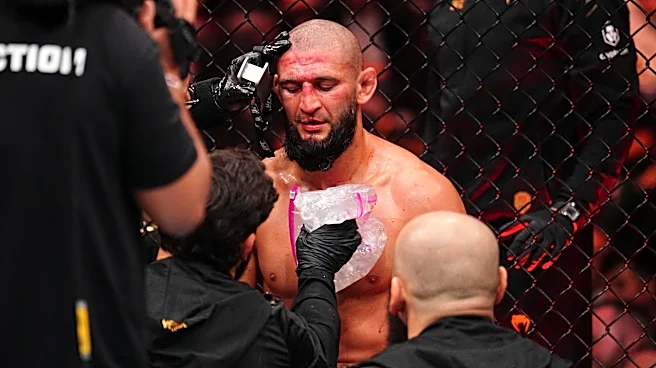
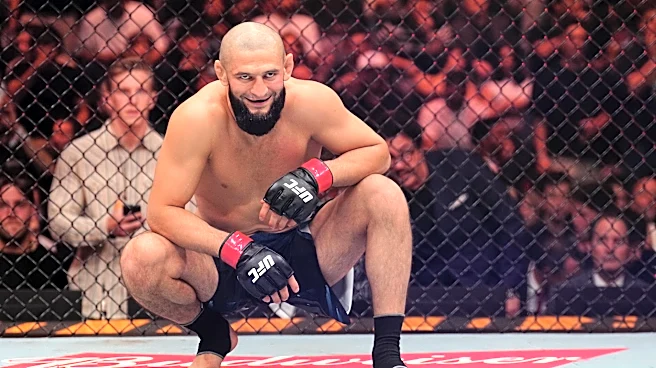
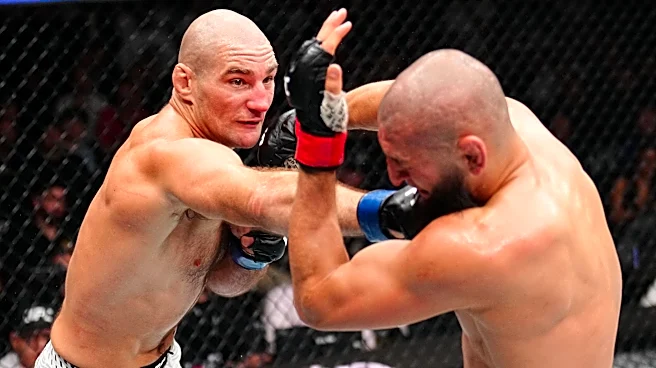
Khamzat Chimaev, a previously undefeated UFC fighter, faced a split decision loss to Sean Strickland at UFC 328, losing his middleweight title. The fight, held in Newark, New Jersey, saw Chimaev struggle after a dominant first round, appearing sluggish
and allowing Strickland to control the pace. Reports suggest that Chimaev had a difficult weight cut, dropping from 231 pounds to 185 pounds, which may have affected his performance. His brother, Artur Chimaev, confirmed that Khamzat's body 'shut down' during the weight cut, leading to oxygen deprivation and health concerns. Despite plans to move up to light heavyweight, Chimaev has expressed interest in a rematch with Strickland, potentially at an event in Abu Dhabi in October.
Why It's Important?
The outcome of UFC 328 highlights the significant impact of weight management on fighter performance and health. Chimaev's struggle underscores the challenges athletes face in meeting weight class requirements, which can lead to severe health risks. This situation may prompt discussions within the UFC and the broader sports community about the safety and regulations surrounding weight cuts. Additionally, Chimaev's potential move to light heavyweight could alter the dynamics of the division, affecting matchups and title contention. The rematch with Strickland, if it occurs, could draw significant attention and revenue, influencing UFC's event planning and marketing strategies.
What's Next?
Chimaev's team has requested a rematch with Sean Strickland, aiming for an event in Abu Dhabi in October. This potential rematch could reignite interest in Chimaev's career and provide an opportunity for redemption. Meanwhile, UFC may need to address the broader issue of weight cutting, possibly revisiting policies to ensure fighter safety. Stakeholders, including UFC executives, fighters, and health professionals, might engage in discussions to develop more sustainable practices. The outcome of these deliberations could lead to changes in how weight classes are managed, impacting future fights and fighter health protocols.