
What's Happening?
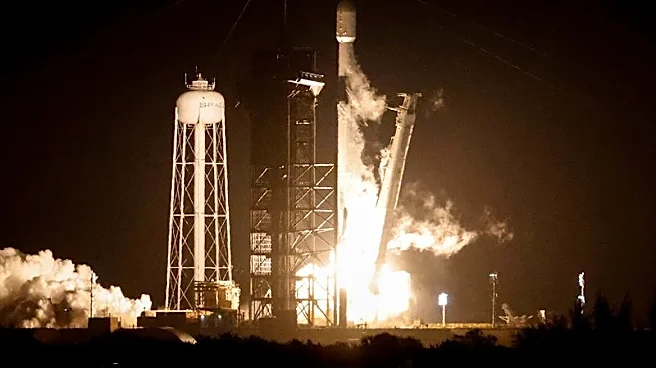
SpaceX is gearing up for the first launch of its upgraded 'Version 3' Starship, scheduled for early to mid-May. This new iteration of the Starship is larger and more powerful than its predecessors, featuring
advanced V3 Raptor engines capable of carrying over 100 tons to low Earth orbit. The recent successful static-fire test of the Starship V3's upper stage marks a significant milestone in its development. This launch will be the 12th overall for the Starship program and the first for the V3 model. SpaceX aims to use this megarocket for future astronaut missions to the moon, as part of NASA's Artemis program.
Why It's Important?
The development of the Starship V3 represents a major advancement in SpaceX's capabilities, potentially transforming the landscape of space travel and exploration. With its increased payload capacity and enhanced performance, the V3 could play a crucial role in NASA's Artemis missions, which aim to return humans to the moon and establish a sustainable presence there. The success of this launch could also bolster SpaceX's position as a leader in the commercial space industry, attracting more contracts and partnerships. Additionally, the technological innovations in the V3 could pave the way for future missions to Mars and beyond.
What's Next?
Following the upcoming test flight, SpaceX will continue to refine the Starship V3's design and performance. The company will work closely with NASA to integrate the Starship into the Artemis program, with the goal of conducting crewed lunar landings in the coming years. Further tests and launches will be necessary to ensure the vehicle's reliability and safety for human missions. The success of these efforts will be critical for achieving NASA's long-term objectives of lunar exploration and eventual human missions to Mars.