




What's Happening?
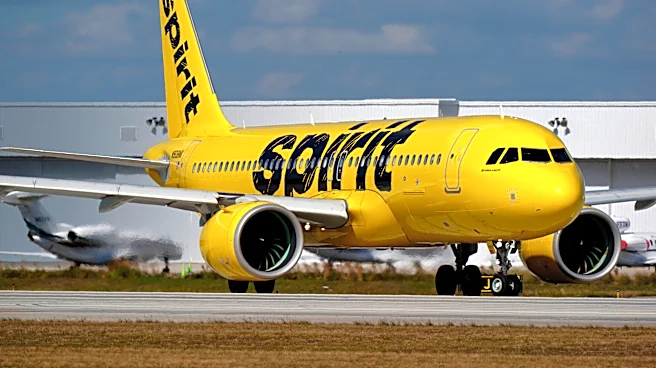
Spirit Airlines has announced the permanent cessation of all operations as of May 2, leaving thousands of passengers stranded and 17,000 employees without jobs. The shutdown follows years of financial losses and two bankruptcies since 2024, exacerbated
by rising jet fuel costs linked to the conflict in Iran. The airline's request for a $500 million government bailout was rejected, leading to its closure. Passengers affected by the shutdown are advised not to go to airports and to seek alternative travel arrangements with other airlines offering limited-time rescue fares. Refunds for canceled flights will be processed automatically for those who purchased tickets directly through Spirit, though the process may be delayed for those who used vouchers or loyalty points.
Why It's Important?
The shutdown of Spirit Airlines is expected to have significant repercussions on the U.S. travel industry, particularly in terms of airfare costs. With one less budget airline in operation, competition is reduced, potentially leading to higher prices for consumers. This development highlights the vulnerability of airlines to external economic pressures and the importance of financial stability in the industry. The loss of Spirit Airlines also underscores the challenges faced by low-cost carriers in maintaining operations amid fluctuating fuel prices and geopolitical tensions.
What's Next?
In the wake of Spirit Airlines' shutdown, other airlines may step in to fill the void left in the market, particularly in regions like South Florida where Spirit had a strong presence. However, it will take time to address capacity and personnel gaps. Passengers seeking refunds or compensation may need to navigate complex bankruptcy proceedings, and the overall impact on airfare prices will depend on how quickly other carriers can adjust to the increased demand.