



What's Happening?
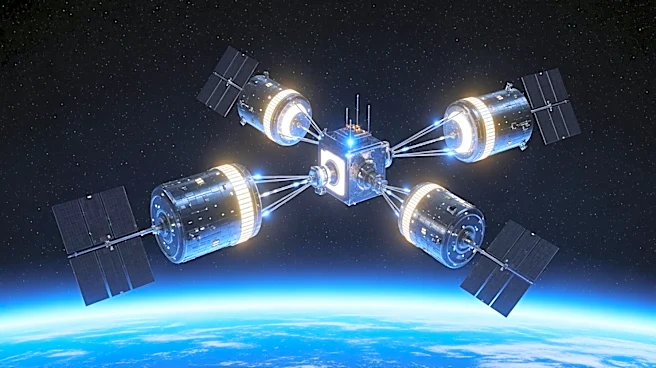
Tech leaders like Elon Musk and Jeff Bezos are advocating for the establishment of data centers in space, citing benefits such as free solar power and unlimited space. Musk's SpaceX and Bezos' Blue Origin are among the companies exploring this concept,
with Google also planning to deploy an AI data center in low Earth orbit by 2027. Despite the enthusiasm from tech giants, scientists and critics question the feasibility and practicality of space-based data centers. Concerns include the high costs of launching and maintaining these centers, potential damage from space debris, and the limited lifespan of such facilities.
Why It's Important?
The push for space-based data centers reflects the growing demand for resources to support AI technologies, which are increasingly consuming significant amounts of electricity and land. While proponents argue that space offers a solution to these challenges, critics highlight the technical and financial hurdles that could impede progress. The debate underscores the broader implications for the tech industry, as companies seek innovative solutions to meet the demands of AI while balancing environmental and community impacts.
What's Next?
As companies continue to explore the potential of space-based data centers, further research and development are expected to address the technical challenges and costs associated with these projects. Regulatory approvals and technological advancements will play a crucial role in determining the viability of this concept. The industry will need to weigh the benefits against the risks and costs to assess the long-term sustainability of space-based data centers.
Beyond the Headlines
The concept of space-based data centers raises ethical and environmental considerations, including the impact on space debris and the sustainability of such projects. As the tech industry explores new frontiers, it must navigate these challenges to ensure responsible innovation and minimize potential negative consequences.