





What's Happening?
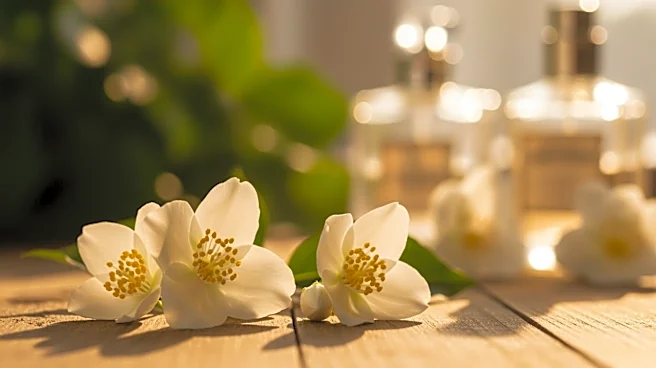
Chanel No. 5, an iconic fragrance launched in 1921, relies heavily on jasmine flowers sourced from Grasse, France. The jasmine is grown by the Mul family, who have been farming in the region for six generations. The flowers are harvested using traditional
methods to maintain their unique scent, which is crucial for the perfume's formula. Grasse, once a hub for the leather trade, transformed into a perfume capital due to its flower cultivation. Over the years, the region's flower fields dwindled due to real estate development and cheaper overseas production. However, Chanel's partnership with local farmers has helped preserve the traditional perfume-making practices. Recently, other luxury brands have also invested in Grasse, contributing to a revival of the local perfume industry.
Why It's Important?
The revival of Grasse's perfume industry highlights the importance of preserving traditional craftsmanship in the face of globalization and industrialization. Chanel's commitment to sourcing jasmine from Grasse ensures the authenticity and quality of its iconic fragrance, which is a significant aspect of its brand identity. This move not only supports local farmers but also helps maintain the cultural heritage of the region. The investment by luxury brands in Grasse underscores a growing trend towards authenticity and sustainability in the luxury goods market. This could influence other industries to prioritize traditional methods and local sourcing, potentially leading to a broader shift in consumer preferences towards products with a strong cultural and historical connection.
What's Next?
The continued investment in Grasse by luxury brands is likely to further strengthen the region's reputation as a perfume capital. As more companies recognize the value of traditional craftsmanship, there may be increased efforts to protect and promote other cultural heritage sites. The success of Grasse's revival could serve as a model for other regions looking to preserve their unique industries. Additionally, the focus on sustainability and authenticity may drive innovation in the perfume industry, leading to new products that combine traditional methods with modern technology. This could also encourage consumers to seek out products with a clear provenance and story, further boosting demand for artisanal goods.