



What's Happening?
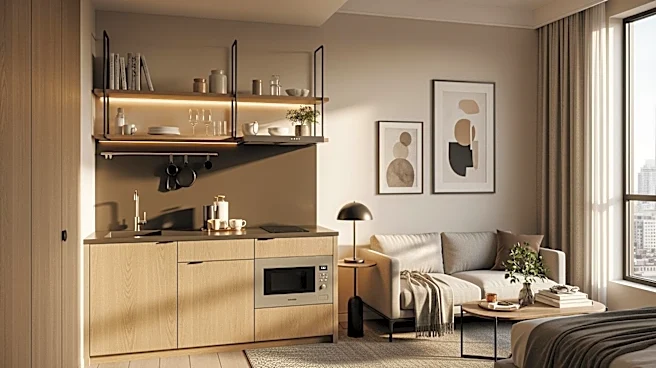
The U.S. hotel industry is undergoing a significant transformation as it adapts to changing travel behaviors and occupancy patterns. There is a growing trend towards extended-stay and apartment-style hotels, driven by the need for more predictable occupancy and stable
cash flow. This shift is attracting investment and reshaping lodging strategies. The industry is also experiencing a construction boom, with over 6,000 hotel projects in the pipeline as of the first quarter of 2026. However, the U.S. market faces challenges due to reduced Canadian travel, as Canadian tourists increasingly opt for domestic and overseas trips instead of visiting the U.S. This trend is putting pressure on U.S. operators who rely on Canadian visitors.
Why It's Important?
The shift towards extended-stay and apartment-style hotels reflects broader changes in the hospitality industry, where stability and predictability are becoming more valued. This trend could lead to more sustainable business models and attract long-term investments. The construction boom indicates confidence in the U.S. market, despite challenges such as reduced Canadian travel. The industry's ability to adapt to these changes will be crucial for maintaining growth and competitiveness. The focus on mixed-use and redevelopment opportunities also highlights a strategic pivot towards more versatile and resilient business models.
What's Next?
As the U.S. hotel industry continues to evolve, operators and investors are likely to focus on expanding their extended-stay portfolios and exploring mixed-use developments. The ongoing construction projects will play a significant role in shaping the future landscape of the industry. Additionally, the industry may need to develop strategies to mitigate the impact of reduced Canadian travel, possibly by targeting other international markets or enhancing domestic tourism offerings. The integration of technology in hospitality is expected to continue, offering new ways to enhance guest experiences and operational efficiency.
Beyond the Headlines
The shift towards extended-stay and apartment-style hotels may have broader implications for urban development and housing markets, as these models often blur the lines between traditional hotels and residential living. This could lead to regulatory challenges and require new zoning considerations. Additionally, the focus on mixed-use developments may drive innovation in urban planning and design, creating more integrated and sustainable communities. The industry's adaptation to changing travel patterns also reflects a broader trend towards flexibility and resilience in the face of global economic and geopolitical uncertainties.