






What's Happening?
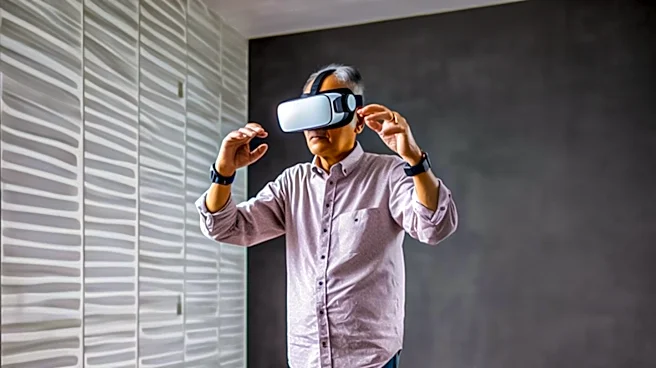
Virtual reality (VR) technology is being used to enhance the lives of seniors in nursing homes, providing them with immersive experiences that allow them to virtually visit places they may never see in person again. Mynd Immersive, a company specializing
in VR for older adults, has expanded its reach to hundreds of healthcare facilities and senior care residences across the United States. The VR headsets, originally developed for dementia and Alzheimer's treatment, offer users a 3D view of chosen destinations, helping to alleviate feelings of isolation and loneliness. Residents at The New Jewish Home in Manhattan have been using these headsets to explore cities like Florence and Paris, with the experiences projected onto screens for others to enjoy as well. The technology aims to provide a sense of normalcy and connection for seniors who have limited mobility or are unable to travel.
Why It's Important?
The use of VR technology in elder care represents a significant advancement in addressing the mental and emotional well-being of seniors. As the U.S. population ages, innovative solutions like VR can play a crucial role in enhancing the quality of life for older adults. By offering virtual travel experiences, these headsets help combat loneliness, a public health issue affecting nearly half of American adults, according to the Surgeon General. The technology also fosters social interaction among residents, as shared experiences can lead to new friendships and a sense of community. Moreover, the application of VR in healthcare settings highlights the potential for technology to support therapeutic interventions, such as for veterans dealing with PTSD or chronic pain.
What's Next?
As VR technology continues to evolve, there is potential for further integration into elder care, with plans to tailor experiences for dementia patients based on symptom severity. Mynd Immersive is exploring ways to expand its offerings and improve the user experience, ensuring that the content is emotionally safe and appropriate. The company is also working on increasing accessibility by collaborating with the Department of Veterans Affairs to provide VR therapy for veterans living at home. As the technology becomes more widespread, it may lead to broader acceptance and integration into standard care practices for seniors.
Beyond the Headlines
While VR offers promising benefits, there are concerns about its long-term impact and the potential for technology to replace human interaction. Experts caution against relying solely on tech solutions, emphasizing the importance of maintaining personal connections in elder care. Additionally, the cost of VR headsets and the lack of insurance coverage for most uses may limit accessibility for some facilities. As the technology develops, it will be important to balance its use with traditional caregiving methods to ensure comprehensive care for seniors.