
What's Happening?
Selena Gomez is reportedly set to star in a new film directed by Brady Corbet, known for his work on 'The Brutalist.' The project, rumored to be titled 'The Origin of the World,' is described as a genre-defying
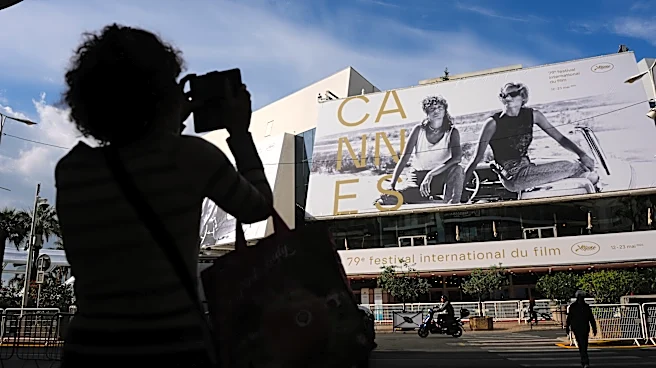
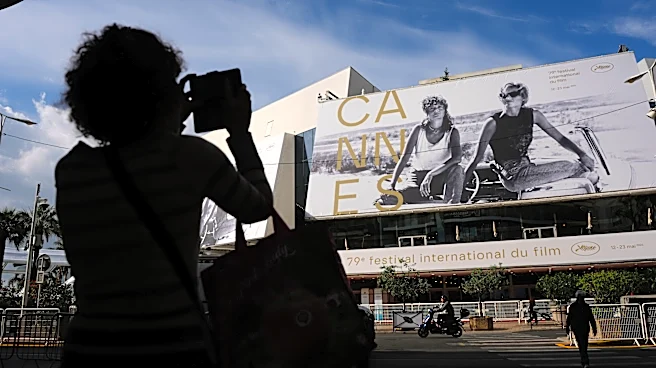
work of art. The film spans from the 19th century into the present day, with a focus on the 1970s. The buzz around the film increased during the Cannes Film Festival, where Cate Blanchett announced her involvement alongside Gomez and Michael Fassbender. The film is expected to be a daring and bold artistic endeavor, with a 200-page script that challenges conventional filmmaking norms.
Why It's Important?
This project marks a significant step in Selena Gomez's career, showcasing her versatility and willingness to engage in complex roles. The involvement of high-profile actors like Cate Blanchett and Michael Fassbender, along with director Brady Corbet, suggests the film will attract considerable attention and potentially redefine genre boundaries. For Gomez, this role could further distance her from her Disney past, highlighting her growth as an actress. The film's ambitious nature may also influence future projects in Hollywood, encouraging filmmakers to explore unconventional narratives and formats.
What's Next?
As the film progresses, industry observers will be keen to see how it is received by critics and audiences. The collaboration between Gomez, Blanchett, and Fassbender could lead to further high-profile projects. The film's release will likely spark discussions about genre-defying cinema and the evolution of storytelling in film. Additionally, Gomez's performance may open doors for more diverse roles, solidifying her status as a serious actress in Hollywood.
Beyond the Headlines
The film's exploration of historical and contemporary themes may offer insights into societal changes over time. Its focus on the 1970s could provide a cultural reflection on that era, potentially resonating with audiences interested in historical narratives. The project's ambitious scope might also challenge traditional film distribution models, given its four-hour length, prompting discussions on how such films are marketed and consumed.