





What's Happening?
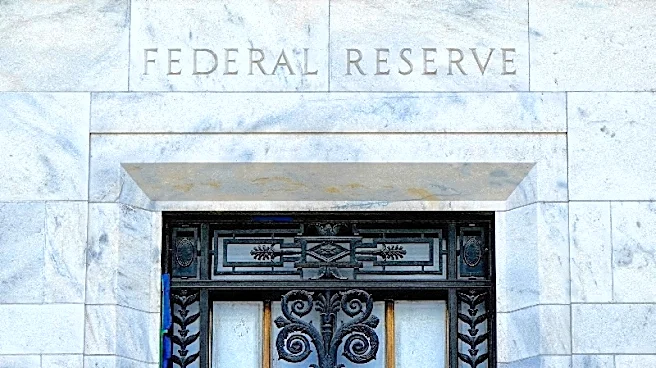
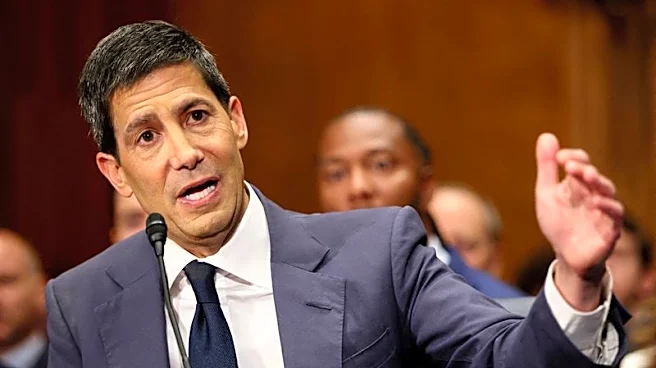
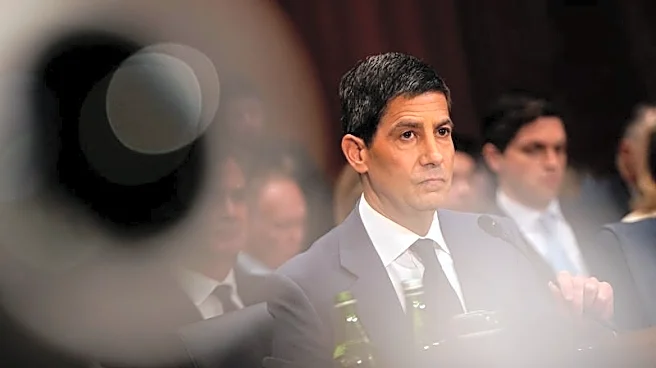
Kevin Warsh is set to return to the Federal Reserve as its leader, bringing with him a reform agenda that could reshape the central bank's operations. Warsh, who previously left the Fed due to disagreements over its bond-buying program, is expected to focus
on changes in how the Fed monitors inflation, its market bailout strategies, and its communication methods. His approach may involve reducing the frequency of press conferences and returning to a more opaque style of central banking. Warsh's nomination by President Trump was confirmed by the U.S. Senate, following a period of tension between Trump and outgoing Fed Chair Jerome Powell. Warsh's immediate challenge will be balancing Trump's demands for interest rate cuts with economic data that suggests otherwise, as inflation remains above the Fed's target and unemployment is relatively low.
Why It's Important?
Warsh's leadership at the Fed could have significant implications for U.S. monetary policy and financial markets. His potential reforms may alter how the Fed communicates with the public and financial markets, impacting investor expectations and market stability. The shift in communication strategy could lead to less transparency, affecting how market participants interpret the Fed's policy intentions. Additionally, Warsh's stance on interest rates and inflation could influence economic growth and employment levels. His approach may also affect the Fed's independence, especially given the previous administration's attempts to exert influence over its decisions. The outcome of Warsh's reforms could have lasting effects on the U.S. economy and its global financial standing.
What's Next?
As Warsh assumes his role, he is likely to initiate internal reviews and debates within the Federal Open Market Committee (FOMC) to explore potential policy changes. These discussions may lead to adjustments in the Fed's balance sheet management and the incorporation of alternative inflation measures. Warsh's proposals will need to be carefully vetted and may face resistance from within the Fed and from external stakeholders. The upcoming policy meetings will be crucial in determining the direction of these reforms and their impact on the Fed's operations. Stakeholders, including financial markets and policymakers, will closely monitor Warsh's actions and their implications for future monetary policy.