



What's Happening?
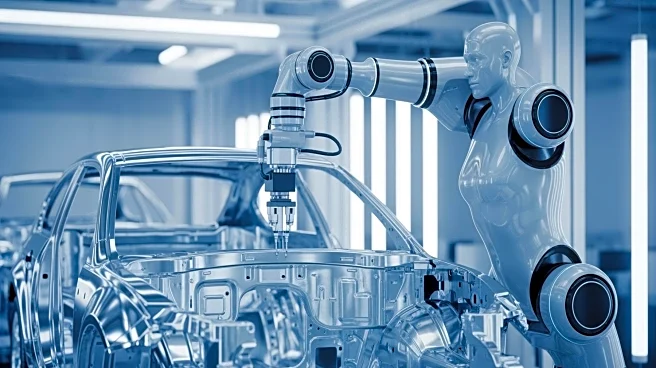
The automotive industry is increasingly integrating humanoid robots into its operations, driven by advancements in AI and robotics. Companies like Tesla, BYD, and Mercedes-Benz are at the forefront, with Tesla deploying its Optimus robots in assembly
operations and Mercedes-Benz partnering with Apptronik to explore logistics applications. The Consumer Electronics Show (CES) 2026 highlighted this trend with a dedicated Robot Pavilion, showcasing innovations from major players like Hyundai, Nvidia, and Qualcomm. Market Research Future projects the global market for humanoid robots to grow significantly, from $40.85 billion in 2025 to $1,036 billion by 2035. Despite the enthusiasm, experts like Craig Melrose from HTEC and Mark Barrott from Plante Moran express skepticism about the immediate practical applications of humanoid robots in manufacturing, suggesting that their use may remain limited to pilot projects and proof of concepts.
Why It's Important?
The integration of humanoid robots in the automotive sector represents a significant shift towards automation and AI-driven manufacturing processes. This development could lead to increased efficiency and innovation in production lines, potentially reducing labor costs and addressing workforce shortages. However, the real-world impact of humanoid robots remains uncertain, as industry experts question their practicality compared to other robotic forms. The substantial projected market growth indicates a strong interest and investment in this technology, which could drive further advancements and adoption across various industries. Companies that successfully implement humanoid robots may gain a competitive edge, while those that fail to adapt could face challenges in maintaining operational efficiency.
What's Next?
As the market for humanoid robots expands, automotive companies are likely to continue exploring their potential applications in production and logistics. Future developments may include more extensive pilot programs and collaborations between automakers and robotics firms. The industry will closely monitor the outcomes of these initiatives to assess the viability and benefits of humanoid robots. Additionally, regulatory and ethical considerations surrounding the use of AI and robotics in manufacturing may influence the pace and direction of adoption. Stakeholders will need to address these challenges to ensure the successful integration of humanoid robots into the automotive sector.
Beyond the Headlines
The rise of humanoid robots in the automotive industry raises broader questions about the future of work and the role of AI in society. As robots become more prevalent, there may be implications for employment, with potential job displacement in certain sectors. This shift could necessitate new policies and training programs to support workers transitioning to new roles. Furthermore, the ethical considerations of AI and robotics, such as privacy, security, and decision-making autonomy, will require careful examination. The industry's approach to these issues could set precedents for other sectors exploring similar technologies.