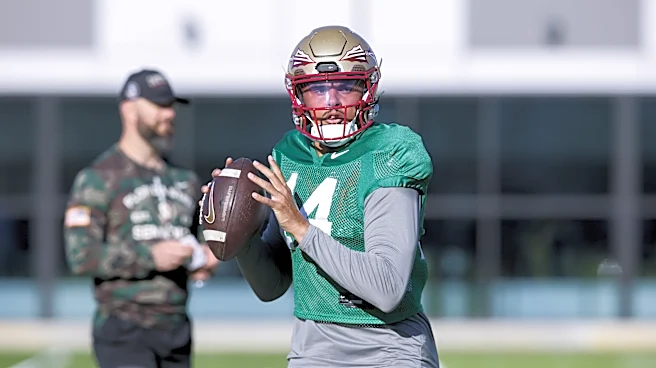







What's Happening?
The Arkansas Razorbacks' spring football game will not be broadcast on ESPN, requiring fans to attend in person to watch the event. This decision comes despite previous concerns that televised games could lead to player scouting by opposing teams through
the transfer portal. The game, set to take place at Razorback Stadium, will feature a matchup between quarterbacks KJ Jackson and AJ Hill, as well as receivers Courtney Crutchfield and Antonio Jordan. The teams have been evenly divided by offensive and defensive coordinators, with head coach Ryan Silverfield overseeing the final adjustments. The event will also include various activities such as a car show, petting zoo, and a concert by country artist Justin Moore.
Why It's Important?
The decision to hold the spring game exclusively in-person highlights the challenges and changes in college sports broadcasting and fan engagement. By not televising the game, the Razorbacks aim to protect their strategies and player performances from being scouted by rivals. This move could impact fan accessibility, particularly for those unable to travel to Northwest Arkansas. It also underscores the evolving landscape of college sports, where media rights and player transfers are increasingly influential. The event's exclusivity may drive local economic activity as fans gather for the game and associated festivities.
What's Next?
Fans interested in attending the game must either be members of the Razorback Foundation or purchase tickets, with options available for those willing to provide personal information for free entry. The game will serve as a critical evaluation opportunity for coaches and players, with film analysis scheduled post-game to prepare for the upcoming season. The outcome of the game and player performances could influence team dynamics and starting positions as the Razorbacks gear up for the fall season.
Beyond the Headlines
The decision to limit the game's broadcast could set a precedent for other college teams considering similar strategies to protect their players and game plans. It raises questions about the balance between fan access and competitive advantage in college sports. Additionally, the event's focus on community engagement through activities and charity drives reflects a broader trend of sports teams leveraging events for social impact.