


What's Happening?
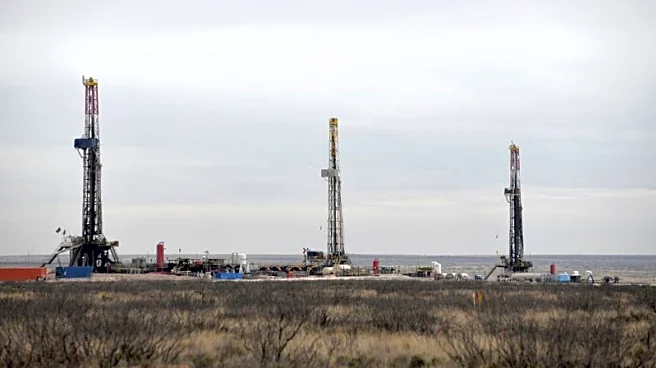
Oil drillers in the United States are exercising caution despite Brent crude trading over $100 per barrel and WTI surpassing $90. The Dallas Fed Energy Survey indicates that while these prices are above the profitable drilling levels for shale and conventional
oil, only 21% of respondents plan to significantly increase drilling. The hesitation stems from uncertainties related to the ongoing Middle Eastern conflict, which complicates investment planning. Energy executives have expressed frustration with the volatility in commodity and equity markets, exacerbated by inconsistent messaging from Washington. The situation is further complicated by the closure of the Strait of Hormuz, which is affecting global energy security and causing fuel shortages in some regions.
Why It's Important?
The cautious approach by U.S. oil drillers highlights the complex interplay between geopolitical tensions and energy markets. High oil prices, while beneficial for profitability, can lead to demand destruction if they rise too high. The ongoing conflict in the Middle East and the closure of the Strait of Hormuz pose significant risks to global oil supply chains, potentially leading to economic disruptions. The situation underscores the vulnerability of energy markets to geopolitical events and the challenges faced by industry stakeholders in navigating such volatility. The outcome of these tensions could have far-reaching implications for global energy security and economic stability.
What's Next?
The oil industry is likely to adopt a 'wait-and-see' approach, monitoring how oil and gas prices evolve over the next six months. Companies may use the current price rally to improve cash flow, reduce debt, and address deferred capital spending. However, the continuation of the Middle Eastern conflict could exacerbate supply chain disruptions and fuel shortages, prompting further strategic adjustments by energy companies. Stakeholders will be closely watching for any resolution to the conflict, which could stabilize markets and influence future drilling and investment decisions.