







What's Happening?
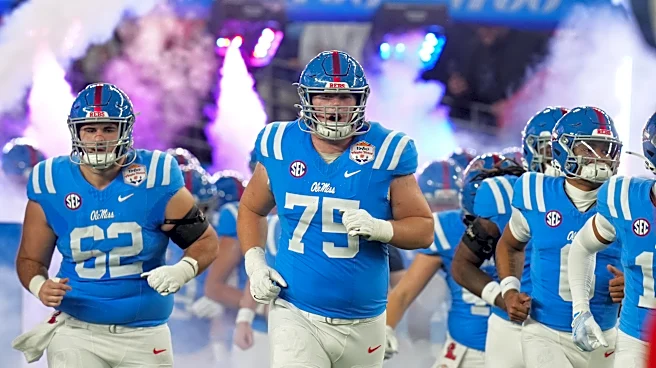
The Ole Miss Rebels football program has significantly benefited from the Name, Image, and Likeness (NIL) era, which has reshaped college football's power dynamics. Since the introduction of NIL laws, Ole Miss has capitalized on these changes to enhance
its competitiveness within the Southeastern Conference (SEC). The program has strategically utilized the transfer portal to attract established players, resulting in a notable improvement in their performance. The Rebels have secured the No. 2 class in the 2026 transfer portal rankings, bolstered by nine four-star additions. This approach has helped Ole Miss win 52 games over the last five seasons and make its first appearance in the expanded College Football Playoffs. The NIL has also played a crucial role in retaining talent, allowing the program to maintain a stable roster despite external interest.
Why It's Important?
The transformation of Ole Miss football under the NIL framework highlights the shifting landscape of college athletics, where financial incentives play a pivotal role in recruiting and retaining talent. This development underscores the increasing importance of NIL in leveling the playing field among college programs, enabling schools like Ole Miss to compete with traditional powerhouses. The ability to attract top-tier athletes and retain key players positions Ole Miss as a formidable contender in the SEC, potentially altering the conference's competitive balance. The success of Ole Miss in leveraging NIL could serve as a model for other programs seeking to enhance their competitiveness in the evolving college sports environment.
What's Next?
As Ole Miss continues to navigate the NIL landscape, the program's ability to sustain its competitive edge will depend on its ongoing investment in NIL opportunities and support infrastructure. The Rebels will need to maintain their momentum in recruiting and retention to remain competitive in the SEC. The program's leadership, including Chancellor Glenn Boyce and Athletics Director Keith Carter, will play a crucial role in ensuring that Ole Miss remains at the forefront of NIL utilization. The success of Ole Miss could prompt other programs to adopt similar strategies, potentially leading to further shifts in the college football hierarchy.