






What's Happening?
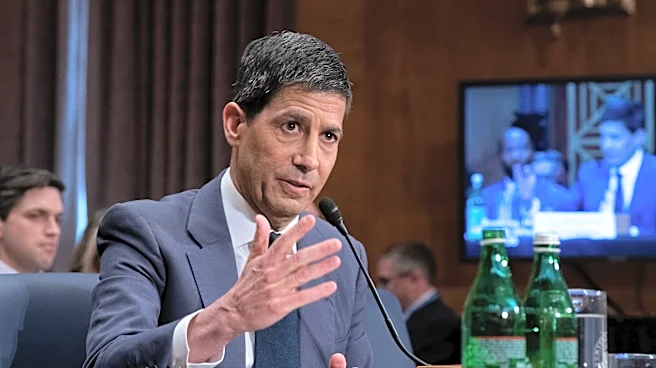
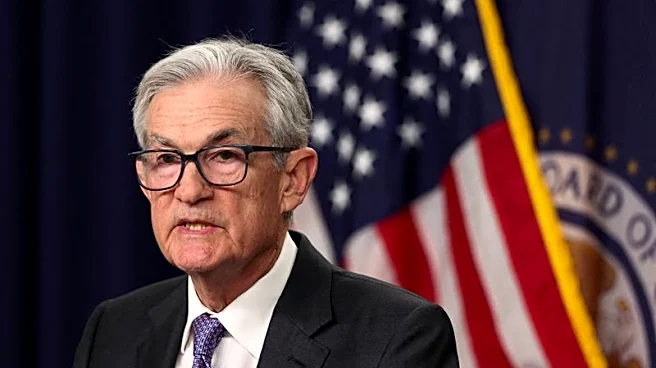
Federal Reserve policymakers are set to meet in Washington this week, with expectations that they will maintain the current interest rates in the range of 3.50%-3.75%. This meeting could be Jerome Powell's last as the head of the U.S. central bank, as his successor,
Kevin Warsh, is likely to be confirmed soon. The decision to hold rates steady comes amid ongoing economic uncertainty due to elevated energy prices and the unresolved U.S.-Iran conflict, which has disrupted global oil supply chains. The U.S. Consumer Price Index recently saw its largest increase in nearly four years, driven by a surge in gasoline and energy prices. The Federal Open Market Committee's decision will be closely watched, especially regarding any indications of future rate hikes if inflation continues to rise.
Why It's Important?
The Federal Reserve's decision to maintain interest rates is significant as it reflects the central bank's cautious approach in navigating the current economic landscape marked by high inflation and geopolitical tensions. The ongoing U.S.-Iran conflict has led to a substantial increase in energy prices, which in turn has contributed to inflationary pressures. This situation poses a challenge for the Fed, which must balance the need to control inflation with the risk of stifling economic growth. The decision to hold rates steady suggests that the Fed is prioritizing economic stability while remaining vigilant about potential inflationary risks. This approach could impact various sectors, including consumer spending, business investment, and the broader financial markets.
What's Next?
Looking ahead, the Federal Reserve will continue to monitor economic indicators closely, particularly inflation and labor market data, to determine future monetary policy actions. The possibility of future rate hikes remains on the table if inflationary pressures persist. Additionally, the confirmation of Kevin Warsh as the new Fed chair could bring changes in the central bank's policy direction. Stakeholders, including businesses and investors, will be keenly observing the Fed's communications for any signals regarding potential shifts in monetary policy. The ongoing geopolitical tensions and their impact on global supply chains will also be critical factors influencing the Fed's future decisions.