
What's Happening?
The NFL has decided to tighten the control over the contact information of draft prospects following a prank call incident involving Shedeur Sanders during the 2025 NFL Draft. Sanders, who was live-streaming
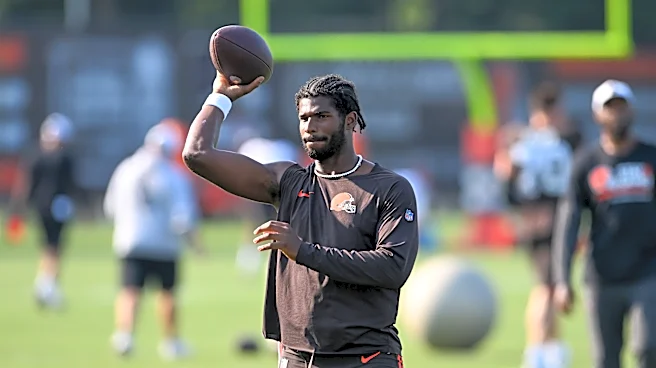
a draft party, received a prank call from Jax Ulbrich, the son of Atlanta Falcons defensive coordinator Jeff Ulbrich. Jax obtained Sanders' phone number from his father's open iPad. As a result of this incident, the NFL has now restricted access to prospects' contact information to a single individual within each franchise's football operations. This person will be responsible for safeguarding the information. The prank call, which went viral, occurred as Sanders was sliding down the draft board, eventually being selected by the Cleveland Browns in the fifth round.
Why It's Important?
This move by the NFL underscores the importance of protecting personal data in professional sports, especially during high-stakes events like the NFL Draft. The incident highlights vulnerabilities in data security and the potential for misuse of personal information. By limiting access to a single point of contact, the NFL aims to prevent similar breaches in the future, ensuring the integrity of the draft process. This change could influence how other sports leagues handle sensitive information, setting a precedent for data protection in sports. The incident also led to financial penalties for the Falcons and Jeff Ulbrich, emphasizing the league's commitment to accountability and data security.
What's Next?
The NFL's new policy will be closely monitored to assess its effectiveness in preventing similar incidents. Teams will need to adapt to the new protocol, ensuring that the designated individual responsible for the contact information is adequately trained in data protection. The league may also consider additional measures or technologies to further secure sensitive information. Stakeholders, including teams and players, will likely evaluate the impact of these changes on the draft process and overall player experience. The incident may prompt other sports organizations to review and strengthen their data security practices.